
Selling without an agent in Maryland removes one cost, the listing-side commission. Everything else stays where it was. The state’s 0.5% transfer tax and your share of the county transfer and recordation taxes are still due at settlement, the buyer still gets a state disclosure form before you sign anything, and Bright MLS still runs through a licensed broker.
The commission line is the easy part of that math. The rest is easier to leave out: taxes that attach to the property rather than to the agent, paperwork Maryland assigns to the seller by name, and buyer-agent compensation, which works differently than it did before August 2024.

Key Takeaways
- FSBO fell to 5% of U.S. home sales, an all-time low, while 91% of sellers used an agent (National Association of REALTORS®, November 2025).
- Sixty percent of FSBO sellers already knew their buyer (NAR, November 2025), so the often-quoted FSBO price gap is not a clean comparison.
- Maryland transfer and recordation taxes are owed either way, and are presumed split 50/50 between buyer and seller (Md. Real Property §14-104).
- If your buyer is a first-time Maryland home buyer, the seller pays the entire county recordation and local transfer tax unless the contract expressly says otherwise, and the full state transfer tax at 0.25% with no such opt-out (§14-104(c)(1) and (c)(2); Md. Tax-Property §13-203(b)(3)).
- A property “may not be submitted that is … listed only by a non-subscriber” (Bright MLS Rules, effective August 14, 2024).
What does selling FSBO actually save a Maryland seller?
For-sale-by-owner hit an all-time low of 5% of U.S. home sales in the year ending June 2025, while a record 91% of sellers used an agent (National Association of REALTORS®, 2025 Profile of Home Buyers and Sellers, November 2025). FSBO removes the listing-side commission. Every other cost of transferring Maryland real property stays on the settlement sheet.
The two sides of a commission are now negotiated separately. Going FSBO ends the listing agreement, but it does not settle what the buyer’s representative gets paid.
NAR reported a FSBO median sale price of $360,000 against $425,000 for agent-assisted sales in its November 11, 2025 summary of the same survey. Read alone, that looks like a $65,000 penalty, and it gets quoted that way constantly.
It is not a controlled comparison. In the same survey, 60% of FSBO sellers already knew the buyer of their home, per NAR Deputy Chief Economist Jessica Lautz, writing November 3, 2025. A sale to a relative or a tenant is often priced for the relationship, and those transactions sit inside the FSBO median. The two figures are mostly measuring different kinds of sales.
What taxes does a Maryland FSBO seller still pay?
Maryland charges a 0.5% state transfer tax on the consideration for the deed (Md. Tax-Property §13-203(a)(1)), plus locally set county transfer and recordation taxes. Section 14-104(b) of the Real Property article presumes those taxes are “shared equally between the grantor and grantee” unless the contract says otherwise. Removing the agent does not change any of that.
Anne Arundel County publishes a recordation tax of $7.00 per thousand of consideration and a county transfer tax of 1.0% up to $999,999.99, rising to 1.5% at $1,000,000 or more (county Office of Finance, retrieved September 10, 2026).
Apply those rates to the county’s July 2026 median sale price of $553,500 (Maryland REALTORS®, Housing Statistics, July 2026, data from Bright MLS) and the default 50/50 split, and a seller’s share lands near $6,089, about 1.1% of the price. That figure is an illustration built from published rates. It is not a quote for your property.
One rule is easy to miss when nobody is reading the offer alongside you. When the buyer is a first-time Maryland home buyer who will occupy the property as a principal residence, §14-104(c)(1) puts the entire county recordation and local transfer tax on the seller “unless there is an express agreement between the parties” that it will not be, and §13-203(b)(3) drops the state rate to 0.25% while making the seller pay all of it, with no such opt-out attached. On that same median, the seller’s default tax bill moves from roughly $6,089 to roughly $10,793. A statement signed under oath by the buyer triggers it (§14-104(c)(5)), and that statement arrives with the offer. The county share is negotiable if you raise it in the contract. The state share is not.
County rates vary across the Baltimore and Annapolis metros. Our Maryland seller closing costs breakdown carries the county-by-county table, and the buyer’s side of the same taxes covers what your buyer will be looking at.
Can a for-sale-by-owner listing go on Bright MLS?
Not directly. Bright MLS is the multiple listing service covering Maryland and much of the Mid-Atlantic, and its rules limit participation to licensed professionals. Rule 1.1.1 opens participation to “Brokers and Licensees actively engaged in the business of real estate in Bright’s Service Area,” and Rule 1.1.2 to appraisers (Bright MLS Rules, effective August 14, 2024).
The rules spell the exclusion out. Rule 1.6.2 states that “a property may not be submitted that is co-listed with one listing broker and one non-subscriber, or that is listed only by a non-subscriber.” Rule 1.6.1 requires the listing agreement itself to allow the broker to submit the listing and a copy of the agreement to Bright.
The practical route is a flat-fee or limited-service listing agreement with a licensed Maryland broker who enters the listing for you. It is also the point where “no agent” turns into a smaller agent bill rather than none at all. Whoever enters the listing is then on Bright’s clock: under Rule 1.7.1, the MLS entry date must fall within two calendar days of the point when any potential buyer may learn about the property.
Bright feeds the portals most buyers search, so where the listing gets syndicated matters more than the sign in the yard. See where Maryland listings actually appear.
Who pays the buyer’s agent now that compensation is off the MLS?
Since August 17, 2024, offers of buyer-broker compensation “are no longer allowed on Multiple Listing Service (MLS) platforms,” per NAR’s summary of the settlement practice changes. Sellers may still offer compensation off-MLS, or offer buyer concessions on an MLS, and compensation “continues to be fully negotiable.”
Bright’s rules carry that through. Rule 1.12.3 bars subscribers from using the Bright system to communicate about compensation or to enter any amount offered to a cooperating broker. Rule 1.12.3(i) permits an offer to pay another broker outside the system when the client authorizes it in writing in advance. Note who those rules bind: the buyer’s agent, not you.
That leaves a FSBO seller negotiating the point directly, with no default to fall back on. The buyer’s agent already holds a written buyer agreement signed before touring, disclosing the amount or rate that agent will receive (NAR, practice changes effective August 17, 2024). Decline to contribute, and the buyer either covers the fee from their own funds or asks you for a concession that does the same work under another name.
The question worth tracking is whether the concession you grant ends up matching the commission you skipped. Those two numbers can land close together, and they show up at different points in the deal, so the comparison is easy to lose.
What disclosures does a Maryland FSBO seller have to deliver?
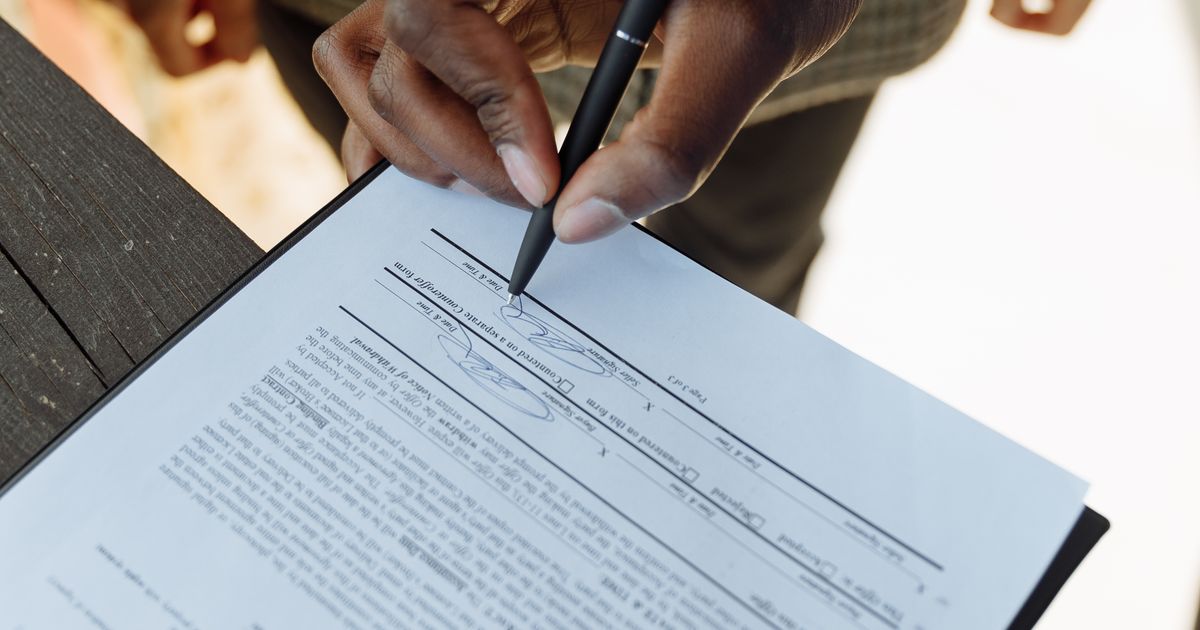
Maryland puts the disclosure obligation on the seller by name. Under Md. Real Property §10-702(c)(1), a vendor of single-family residential real property must deliver to each purchaser either a residential property condition disclosure statement or a disclaimer statement, “on a form provided by the State Real Estate Commission.”
Choosing the disclaimer does not clear the field. Section 10-702(d)(1) still requires disclosure of “any latent defects of which the vendor has actual knowledge,” meaning material defects a buyer would not catch on a careful visual inspection that would pose a direct threat to health or safety. The disclosure version covers water and sewer, structural systems, plumbing, electrical, heating and air conditioning, wood-destroying insects, hazardous materials including asbestos, lead-based paint and radon, and smoke and carbon monoxide alarms.
Section 10-702(f)(1) requires delivery “on or before entering into a contract of sale,” and there is no grace period. Miss it and the purchaser gains a right to rescind and to the return of any deposit, subject to the cutoffs in subsection (h). Under §10-702(k)(1), those purchaser rights “may not be waived in the contract of sale and any attempted waiver is void.”
One part of the statute speaks directly to the FSBO decision. Section 10-702(m)(1) assigns the listing broker a duty to inform the seller of the seller’s rights and obligations under the section, and §10-702(m)(3) provides that a licensee who performs those duties is not liable to any party for a violation. Selling without a listing broker removes the person whose job it is to walk you through the form, along with the professional liability sitting behind them. You keep the obligation and lose the backstop.
If the home predates 1978, federal law adds a layer. Sellers must disclose known lead-based paint and hazards, provide the “Protect Your Family From Lead in Your Home” pamphlet before contract, and allow the buyer 10 days to conduct a paint inspection or risk assessment, under Section 1018 of Title X (U.S. Environmental Protection Agency, updated May 27, 2026).
What paperwork still has to be right at settlement?
Recording a Maryland deed has its own checklist. Md. Real Property §3-104(f)(1)(ii) provides that a deed may not be recorded unless it bears either an attorney’s certification that it was prepared by or under that attorney’s supervision, or “a certification by a party named in the instrument that the instrument was prepared by that party.”
That second option is the one that matters if you are selling on your own, and it is genuine: Maryland does not force you to hire an attorney to draft your own deed. Whether you should turns on how ordinary the title is.
Recording takes more than the deed. Under §3-104(a)(1), the instrument must carry the tax collector’s certificate for the county where the property is assessed, a complete intake sheet, and a copy of the instrument and any survey for the Department of Assessments and Taxation. Section 3-104(b)(1) blocks transfer on the assessment books until taxes and charges currently due are paid.
The deposit needs its own plan. Md. Business Occupations and Professions §17-505 requires a broker to hold trust money in an authorized account until the transaction is consummated or terminated, with a defined notice and protest process before any distribution. Without a broker, there is no broker escrow account. A FSBO seller taking a deposit needs a neutral third party to hold it, usually the settlement company, plus contract language saying who releases the money and when.
When does FSBO actually make sense in Maryland?
When you already have the buyer. Sixty percent of FSBO sellers knew the buyer of their home (NAR, November 2025), and that is the version of FSBO that holds up. There is no marketing to do and no showing schedule to run, and a buyer you already know is less likely to walk over a repair request.
Marketing reach is where the argument gets harder. NAR reported that 40% of FSBO sellers “didn’t actively market their homes” (NAR, November 11, 2025). Sellers overall told the same survey they placed a high priority on marketing the home to potential buyers, pricing it competitively, and selling within a specific timeframe. Asked separately what gave them trouble, FSBO sellers “most often said they struggled with pricing their home, preparing it for sale and selling within their desired timeframe” (NAR, November 11, 2025). Pricing and timing sit on both lists.
Maryland’s speed raises the stakes on pricing. Statewide median days on market was 14 in July 2026, with a median sale price of $455,000, up 2.2% year over year, on 6,328 units sold and 3.0 months of inventory (Maryland REALTORS®, Housing Statistics, July 2026, data from Bright MLS). Sub-markets moved faster: 7 days in Howard County, 10 in Baltimore County, 11 in Anne Arundel. In a market that clears that fast, the first two weeks are most of your leverage, and a price set too high burns them.
Weighing the two paths is easier with the full Maryland selling process and timeline in front of you, plus what preparation returns at resale, current market conditions, and the buyer’s side of the transaction, since you will be fielding their questions.
Maryland defines providing real estate brokerage services as doing those things “for consideration … for another person” (Md. Business Occupations and Professions §17-101(l)), and §17-301(a) requires a license only for providing those services. An owner selling their own property sits outside that definition and needs no license. Legal, though, is not the same as free.
Run the numbers before you choose
Price both paths on your actual address, using your county’s rates and the kind of buyer you expect, then compare the bottom lines instead of the commission lines.
Next Step Realty works out of Timonium and Annapolis, covering Anne Arundel, Howard and Baltimore counties. For a seller’s net sheet built from live Bright MLS comparable sales, get in touch or call 443-901-2200. If the numbers say FSBO, they say FSBO.
Frequently Asked Questions
Is it legal to sell your own house in Maryland without a real estate license?
Yes. Maryland defines real estate brokerage services as providing them “for consideration … for another person” (Md. Business Occupations and Professions §17-101(l)), and §17-301(a) requires a license only for providing those services. An owner selling their own property falls outside the definition and needs no license.
Can a for-sale-by-owner home be listed on Bright MLS?
Not by the owner. Bright MLS Rule 1.1.1 opens participation to brokers and licensees actively engaged in real estate, and Rule 1.6.2 states a property “may not be submitted that is … listed only by a non-subscriber” (Bright MLS Rules, effective August 14, 2024). Reaching Bright means hiring a licensed broker, often on a flat-fee agreement.
Do I still pay the buyer’s agent if I sell FSBO in Maryland?
That one is negotiable. Since August 17, 2024, compensation offers cannot appear on an MLS, though sellers may still offer compensation off-MLS or grant buyer concessions on an MLS, and compensation “continues to be fully negotiable” (NAR). If you decline, the buyer pays their agent directly or asks you for a concession.
What disclosure form does a Maryland FSBO seller have to use?
The state’s own. Md. Real Property §10-702(c)(1) requires the seller to deliver either a residential property condition disclosure statement or a disclaimer statement “on a form provided by the State Real Estate Commission,” on or before entering the contract. Even the disclaimer version requires disclosing known latent defects under §10-702(d)(1).
Do FSBO homes really sell for less in Maryland?
The national gap is real but not clean. NAR reported a FSBO median of $360,000 against $425,000 for agent-assisted sales in 2025. In the same survey, 60% of FSBO sellers already knew their buyer, so many of those sales were never priced against the open market at all.
The bottom line
Selling without an agent in Maryland is legal and uncommon, and it changes fewer line items than most sellers expect. The transfer and recordation taxes attach to the property, so they are owed either way. The State Real Estate Commission disclosure form is the seller’s job by statute, with no broker standing behind it. Reaching Bright MLS still runs through a licensed broker. And buyer-agent compensation did not disappear in August 2024. It turned into a negotiation.
If you already have your buyer, FSBO deserves a serious look. If you are relying on the open market to produce one in a state where the median home went under contract in 14 days this July, the marketing and pricing work is the job. Start with the county-by-county cost of selling in Maryland so the tax side of your comparison rests on published rates.
