


Latest News
Keep on top with latest and exclusive updates from our blog on the Los Angeles real estate world. Next Step Realty posts about tips and trends for buyers, sellers, and investors every week. Whether it be about staging your property or a snapshot of the market, this is your one stop shop.
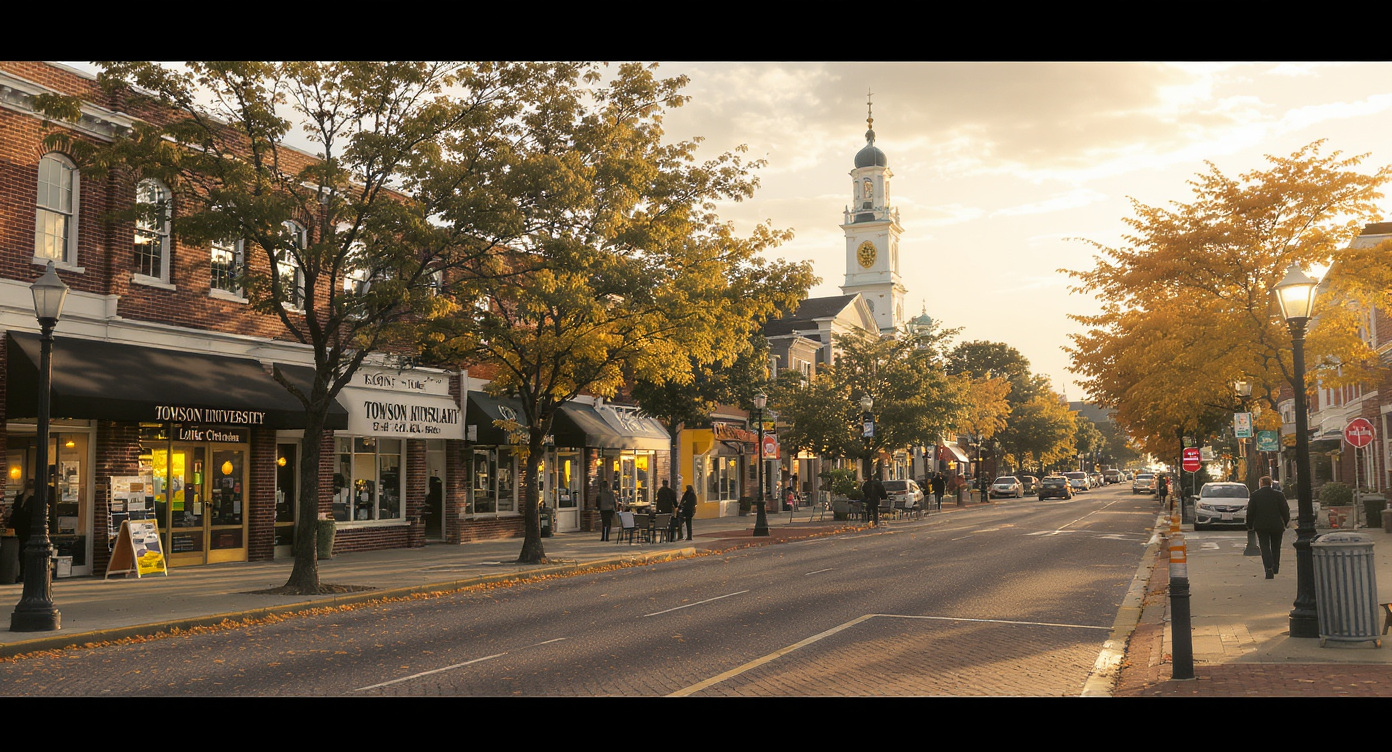
By Michael Soper, Realtor at Next Step Realty. Our Timonium HQ at 22 W. Padonia Rd is a five-minute drive from Towson, and our team has helped relocating families close on homes in Rodgers Forge, Stoneleigh, and Anneslie for more than a decade. Why Towson Is Baltimore County's Most Searched Suburb in 2026 In Q1 2026, Bright MLS recorded a $475,000 median sold price across 21204 and 21286 ZIP codes, with average days on market under 14 (Bright MLS, Q1 2026 Baltimore Metro Market Report). Towson keeps drawing relocating families because it stacks three rare ingredients: walkable downtown, top-zoned BCPS schools, and pre-war neighborhoods 20 minutes from Inner Harbor. Key Takeaways Towson's median home price hit $475K in Q1 2026, up roughly 4.6% year over year (Bright MLS). Three BCPS high schools serve Towson; Dulaney HS scored highest in the 2025 Maryland Report Card. Towson University enrolls over 19,000 students, driving rental demand and parking pressure within a 1-mile radius of campus. DC commute is 75-95 minutes each way; plan around it, do not assume. Towson Quick Facts Median sold price (Q1 2026): $475,000 (Bright MLS) Property tax rate (Baltimore County, FY26): $1.10 per $100 assessed + $0.112 state = ~1.21% effective Public high schools: Towson HS, Dulaney HS, Loch Raven HS (zoning varies by street) Private options: Calvert Hall College HS, Loyola Blakefield, Notre Dame Prep Population: ~59,500 (US Census 2024 estimate) Walk Score (downtown): 87 of 100 What Are the Best Towson Neighborhoods for Families? As of Q1 2026, Rodgers Forge and Stoneleigh post the lowest days-on-market in the 21212 and 21204 ZIPs, both averaging under 9 days (Bright MLS, Q1 2026). Family buyers cluster here because the brick row-and-twin housing stock costs less per square foot than detached West Towson homes while feeding the same elementary schools. Rodgers Forge and Stoneleigh Rodgers Forge runs roughly 1,800 brick rowhomes built between 1937 and 1953. Stoneleigh sits just north with detached colonials on larger lots. Both feed Stoneleigh Elementary, then Dumbarton Middle, then Towson HS. Median Rodgers Forge sale: $385K. Median Stoneleigh sale: $625K (Bright MLS Q1 2026). Anneslie, Idlewylde, and Knollwood Anneslie and Idlewylde sit south of the Beltway with cottage-style and Cape Cod inventory under $500K. Knollwood, north of campus, runs slightly higher and feeds Loch Raven HS. Our Timonium-based agents have noticed Anneslie buyers are increasingly young families priced out of Roland Park, willing to trade Baltimore City schools for BCPS. West Towson and Towson Hunt West Towson offers detached mid-century homes on quarter-acre lots, typically $625K-$900K. Towson Hunt, off Charles Street, leans larger and newer with prices regularly clearing $1M. Both zone to Dulaney HS in most cases, but verify by street address. According to Bright MLS Q1 2026 data, Stoneleigh and Rodgers Forge averaged 8.4 days on market, the tightest in Baltimore County outside Roland Park, signaling sustained family-buyer demand for top-zoned BCPS school feeders. For a comparable suburb with newer construction and bigger lots, see our Lutherville community guide. Buyers wanting more rural breathing room often cross-shop Cockeysville or Bel Air in Harford County. How Good Are Towson's Public Schools? In the 2025 Maryland Report Card, Dulaney HS earned 4 stars and ranked among the top 10 traditional public high schools in Baltimore County, while Towson HS earned 3 stars with strong AP participation (Maryland State Department of Education, 2025 Report Card). Three BCPS high schools serve Towson, and zoning depends on the exact street. The Three Public High Schools Towson HS Law and Public Policy magnet: serves central Towson, Rodgers Forge, Stoneleigh, and parts of Anneslie. About 1,470 students. Dulaney HS: serves West Towson, Towson Hunt, and most of the Charles Street corridor heading north. Strongest STEM and AP profile in the district per the 2025 Report Card. Loch Raven HS: serves Knollwood, parts of Idlewylde, and northeast pockets. Smaller (about 1,150 students) with a Pre-Med and Bioscience magnet. Always verify school zoning by exact address using the BCPS School Locator (Baltimore County Public Schools). Two homes on the same block can zone differently. Private School Options Calvert Hall College HS (Catholic, all-boys, ~1,200 students) and Loyola Blakefield (Jesuit, all-boys) sit inside Towson. Notre Dame Prep (all-girls) is a 10-minute drive. Tuition runs $22K-$28K per year. Here is the contrarian read most relocation guides miss: families fixated on Dulaney HS often overpay $40K-$60K for a West Towson address when a Stoneleigh listing zoned to Towson HS performs nearly identically on AP scores at a lower price point. For mortgage planning around school-zone premiums, our buyer guide walks through pre-approval. Maryland-specific assistance options sit in our Maryland Mortgage Program guide. What Does It Cost to Own in Towson? Baltimore County's FY 2026 real property tax rate is $1.10 per $100 of assessed value, with the state of Maryland adding $0.112, for a combined effective rate near 1.21% (Baltimore County Department of Finance, FY 2026 Tax Rates). On a $475K assessment, that runs about $5,750 per year. Total Monthly Carrying Cost Example For a $475,000 Rodgers Forge rowhome with 10% down at 6.75% (April 2026 average per Freddie Mac PMMS): Principal and interest: ~$2,772 Property tax: ~$479 Homeowners insurance: ~$110 PMI: ~$160 Total PITI: ~$3,521 Add HOA fees if buying in Towson Hunt or newer condo developments (typically $150-$400 monthly). Homestead Tax Credit caps annual assessment increases at 4% for owner-occupants, a meaningful protection in a market that just rose 4.6% YoY. Closing Costs and Maryland Specifics Maryland charges a 0.5% state transfer tax plus Baltimore County's 1.5% recordation and transfer tax, typically split between buyer and seller. First-time Maryland buyers can apply for a state transfer tax exemption, knocking 0.25% off the buyer side. Our sellers guide walks through the seller side of these charges. Per the Baltimore County Department of Finance, the FY 2026 combined property tax rate of approximately 1.21% means a $500,000 Towson home generates about $6,050 in annual taxes, ranking middle-of-the-pack among Maryland counties. How Does Towson University Affect the Housing Market? Towson University enrolled 19,154 students in fall 2024, the second-largest university in the University System of Maryland (Towson University Office of Institutional Research, 2024 Fact Book). The campus reshapes housing demand, parking, and downtown energy in a roughly one-mile radius. Rental Pressure Near Campus Streets within walking distance of campus, parts of Aigburth Manor, Burkleigh Square, and the West Towson edge nearest York Road, see heavy student rental conversion. Investor activity pushes prices on smaller homes, and street parking turns brutal Tuesday through Thursday during semesters. Downtown Towson Energy The flip side: a walkable downtown most Baltimore suburbs cannot match. Towson Town Center, the largest enclosed mall in the Baltimore region, anchors retail, with smaller corridors along York Road and Allegheny Avenue serving restaurants, breweries, and the Cinemark theater (Towson Town Center, Simon Property Group). Game-Day and Event Traffic Tigers football and basketball home games, plus Saturday graduation ceremonies, can lock down side streets near campus for 3-4 hours. When we show homes within four blocks of campus, we coach buyers to also visit on a Wednesday at 5 PM to feel the actual traffic load, not just the listing-photo Sunday morning calm. Is Towson a Realistic Commute to DC? Per the 2024 American Community Survey, the mean travel time to work for Towson residents was 28 minutes, but DC commuters report 75-95 minute one-way drives via I-95 or MARC train (US Census Bureau, ACS 5-Year Estimates 2019-2023). Towson works for Baltimore-anchored careers; DC commuters should plan carefully. The Three Commute Realities Baltimore CBD/Inner Harbor: 18-25 minutes via I-83 off-peak, 30-40 minutes peak. Light rail at Lutherville station extends the option. BWI / Aberdeen Proving Ground: 30-45 minutes via I-695 and I-95. Washington DC: MARC Penn Line from Baltimore Penn Station runs 65-75 minutes to Union Station, plus your drive to the train. Total door-to-door is rarely under 90 minutes. Driving is worse. Towson vs. Lutherville and Cockeysville Walkable Towson trades larger lots for downtown access. Lutherville and Cockeysville offer newer detached construction, more square footage per dollar, and quieter streets, but you drive everywhere. Bel Air in Harford County goes further on lot size and price, but adds commute distance to almost every Baltimore destination. Compare side-by-side using our Lutherville guide, Cockeysville guide, or Bel Air guide. What Should Out-of-State Buyers Know Before Moving to Towson? Maryland's average 30-year fixed mortgage rate sat at 6.78% in April 2026 per Freddie Mac PMMS, with closing typically running 30-45 days from contract (Freddie Mac Primary Mortgage Market Survey, April 2026). Out-of-state buyers should expect a structured Maryland process with attorney involvement and county-level title work. Inspection and Disclosure Norms Maryland uses a Residential Property Disclosure or Disclaimer Statement. Most Towson sellers choose Disclaimer (sold as-is), so inspection is non-negotiable. Pre-war Rodgers Forge homes commonly have galvanized supply lines, knob-and-tube remnants, or original 60-amp panels. Budget $5K-$15K for systems updates on homes built before 1955. Ground Rent (Yes, Really) Some older Baltimore-area homes carry ground rent: a small annual fee paid to a separate ground rent owner, usually $50-$150 per year. It is redeemable, but unfamiliar to out-of-state buyers. Always check the title commitment. Working With a Local Agent Our Next Step Realty office at 22 W. Padonia Rd in Timonium sits five minutes from downtown Towson, and our agents farm these neighborhoods weekly. Reach out to schedule a relocation consultation, virtual or in-person. Frequently Asked Questions What is the median home price in Towson MD in 2026? Bright MLS Q1 2026 data shows a $475,000 median sold price across the 21204 and 21286 ZIP codes, up roughly 4.6% year over year. Stoneleigh and West Towson run higher (median $625K), while Rodgers Forge rowhomes average $385K (Bright MLS, Q1 2026 Baltimore Metro Market Report). Which Towson high school is best? Dulaney HS earned 4 stars on the 2025 Maryland Report Card, the highest among Towson's three zoned public schools, with strong STEM and AP participation. Towson HS and Loch Raven HS each earned 3 stars. Verify your address-specific zoning at Baltimore County Public Schools before buying. What is the property tax rate in Baltimore County? Baltimore County's FY 2026 real property tax rate is $1.10 per $100 of assessed value, plus Maryland's $0.112 state rate, totaling about 1.21% effective. On a $475K Towson home, that runs near $5,750 annually before any Homestead Tax Credit reduction (Baltimore County Department of Finance, FY 2026). Is Towson a good place to live for families? Yes, especially for families prioritizing walkability and BCPS school quality. Stoneleigh and Rodgers Forge feed Stoneleigh Elementary and Towson HS, post sub-9-day median market times in Q1 2026, and sit minutes from Towson Town Center retail and Towson University cultural amenities (Bright MLS, Q1 2026). Ready to Tour Towson Homes? Towson rewards buyers who do address-level homework: schools, taxes, ground rent, and commute realities all shift block by block. Our team at Next Step Realty has helped relocating families close in Rodgers Forge, Stoneleigh, Anneslie, and West Towson for over a decade, and our Timonium HQ keeps us five minutes from every showing. If you are weighing Towson against neighboring suburbs, start with our Lutherville guide or Cockeysville guide. Ready for a personalized search? Contact our team to schedule a relocation consultation. Sources: Bright MLS, Q1 2026 Baltimore Metro Market Report, retrieved 2026-05-04, https://www.brightmls.com/ Maryland State Department of Education, 2025 Maryland Report Card, retrieved 2026-05-04, https://reportcard.msde.maryland.gov/ Baltimore County Public Schools, retrieved 2026-05-04, https://www.bcps.org/ Baltimore County Department of Finance, FY 2026 Tax Rates, retrieved 2026-05-04, https://www.baltimorecountymd.gov/departments/budfin/ Towson University Office of Institutional Research, 2024 Fact Book, retrieved 2026-05-04, https://www.towson.edu/ US Census Bureau, ACS 5-Year Estimates 2019-2023, retrieved 2026-05-04, https://www.census.gov/programs-surveys/acs Freddie Mac, Primary Mortgage Market Survey, April 2026, retrieved 2026-05-04, https://www.freddiemac.com/pmms Towson Town Center, Simon Property Group, retrieved 2026-05-04, https://www.simon.com/mall/towson-town-center { "@context": "https://schema.org", "@type": "FAQPage", "mainEntity": [ { "@type": "Question", "name": "What is the median home price in Towson MD in 2026?", "acceptedAnswer": { "@type": "Answer", "text": "Bright MLS Q1 2026 data shows a $475,000 median sold price across the 21204 and 21286 ZIP codes, up roughly 4.6% year over year. Stoneleigh and West Towson run higher (median $625K), while Rodgers Forge rowhomes average $385K." } }, { "@type": "Question", "name": "Which Towson high school is best?", "acceptedAnswer": { "@type": "Answer", "text": "Dulaney HS earned 4 stars on the 2025 Maryland Report Card, the highest among Towson's three zoned public schools, with strong STEM and AP participation. Towson HS and Loch Raven HS each earned 3 stars. Verify your address-specific zoning with Baltimore County Public Schools before buying." } }, { "@type": "Question", "name": "What is the property tax rate in Baltimore County?", "acceptedAnswer": { "@type": "Answer", "text": "Baltimore County's FY 2026 real property tax rate is $1.10 per $100 of assessed value, plus Maryland's $0.112 state rate, totaling about 1.21% effective. On a $475K Towson home, that runs near $5,750 annually before any Homestead Tax Credit reduction." } }, { "@type": "Question", "name": "Is Towson a good place to live for families?", "acceptedAnswer": { "@type": "Answer", "text": "Yes, especially for families prioritizing walkability and BCPS school quality. Stoneleigh and Rodgers Forge feed Stoneleigh Elementary and Towson HS, post sub-9-day median market times in Q1 2026, and sit minutes from Towson Town Center retail and Towson University cultural amenities." } } ] }
Read more
You'd think every real estate site shows the same listings. They don't. The home you saw on Zillow last night may have been under contract for two days. The price your neighbor's "Zestimate" showed might have been pulled from comparable sales six months stale. And the "off-market" home that caught your eye on Realtor.com? It may have been sold before the photo even loaded. For Maryland buyers, sellers, and out-of-state relocators, knowing which platform to trust changes outcomes. This guide breaks down Bright MLS, Zillow, and Realtor.com so you can pick the right tool for the right moment. Key Takeaways Bright MLS is the source-of-truth listing database for Maryland. It serves 100,000+ subscribers across 40+ associations in MD, DC, DE, PA, NJ, VA, and WV (Bright MLS, About Us page, retrieved 2026-04-28). Zillow is a consumer aggregator, not a source. Its Zestimate is a published-error model, not an appraisal (Zillow, Zestimate accuracy page, retrieved 2026-04-28). Realtor.com sits between the two: NAR-affiliated, pulling MLS feeds with more discipline than Zillow but typically slower than Bright MLS itself. For serious Maryland house hunters, agent-curated Bright MLS access wins on speed and accuracy. Zillow and Realtor.com still play useful roles in early research. Quick comparison: Bright MLS vs Zillow vs Realtor.com Here's the side-by-side, before we get into category-by-category detail. Each platform pulls from a different point in the data chain, which is the single biggest reason listings look different across them. Platform Data source Listing latency Best for Accuracy for MD Bright MLS Direct from listing agents (source of truth) Minutes Active buyers writing offers Highest, the system of record Realtor.com MLS feeds via NAR-affiliated partnership Typically 24 to 48 hours Casual browsing with reasonable accuracy High, intermediate freshness Zillow Mixed: MLS feeds, broker feeds, public records Variable Early-stage browsing, rentals, off-market curiosity Derivative, varies by listing Source: platform documentation referenced throughout this article. Retrieved 2026-04-28. What is Bright MLS, and why does it matter in Maryland? In 2026, Bright MLS reports serving more than 100,000 real estate professionals across approximately 40 REALTOR associations spanning Maryland, DC, Delaware, Pennsylvania, New Jersey, Virginia, and West Virginia (Bright MLS, About Us, 2026). For Maryland buyers, that footprint means a single shared data system covers virtually every brokerage you'll encounter. Bright MLS is what's called a multiple listing service. Listing agents enter the property, photos, price, status, and disclosures directly into it. When a Maryland buyer's agent searches for new listings, they're querying that database in real time, not a copy of a copy. How Bright MLS coverage maps to Maryland Bright MLS is the dominant MLS for the Mid-Atlantic, formed through the 2017 merger of MRIS and TREND MLS to consolidate fragmented regional systems (Bright MLS, About Us, retrieved 2026-04-28). If you're shopping in Annapolis, Baltimore City, Howard County, or Anne Arundel County, your agent is almost certainly pulling from Bright. Citation capsule: Bright MLS describes itself as one of the largest MLS systems in the United States, serving 100,000+ subscribers and approximately 40 REALTOR associations across Maryland, DC, Delaware, Pennsylvania, New Jersey, Virginia, and West Virginia (Bright MLS, About Us, 2026). For neighborhood-specific shopping, see our community guides for Annapolis, Baltimore, and Severna Park. What is Zillow, and how is it different from an MLS? As of 2026, Zillow describes itself as "the most visited real estate website in the United States" with hundreds of millions of monthly visits, but it is a consumer-facing aggregator rather than a source of truth (Zillow, About Zillow corporate page, retrieved 2026-04-28). Zillow does not originate listings. It republishes data pulled from MLS feeds, broker direct feeds, public records, and consumer-submitted inputs. That mixed sourcing is why Zillow is so useful for early browsing and so frustrating for active buyers. The same listing can appear on Zillow with a different status, photo set, or price than what's currently in Bright MLS. How accurate is the Zestimate, really? Zillow publishes a national median error rate for the Zestimate on its accuracy page, with separate, higher error rates disclosed for off-market homes versus active listings (Zillow, Zestimate accuracy, retrieved 2026-04-28). Zillow itself states the Zestimate is "a starting point" and not a substitute for an appraisal. [UNIQUE INSIGHT] Here's the part most buyers miss: Zestimates for active listings tend to be more accurate than Zestimates for off-market homes, because active listings have a fresh asking price the algorithm can anchor to. The "what's my home worth" Zestimate on a home that hasn't sold in 12 years is doing a lot more guessing than buyers assume. If you're a Maryland homeowner curious about value, a Zestimate is a starting input. A comparative market analysis (CMA) from a Bright MLS-credentialed agent is the version lenders and appraisers actually use. Start with our home worth tool for a Maryland-specific estimate. What is Realtor.com, and where does it fit? Realtor.com is operated by Move, Inc., and has held an exclusive operating agreement with the National Association of REALTORS since the site's founding in 1996, granting it access to listing data through MLS partnerships (Realtor.com, About Us page, retrieved 2026-04-28). That NAR relationship is the structural difference between Realtor.com and Zillow. Practically, Realtor.com pulls listings from MLSs (including Bright MLS) under formal data agreements, which tends to make its data fresher and cleaner than Zillow's blended feed, but still slower than the MLS itself. Why Realtor.com latency still trails Bright MLS Even with NAR partnerships, syndicated listings move through queues, normalization, and republishing pipelines before they appear on Realtor.com. By the time a new Annapolis listing renders publicly on Realtor.com, your Bright MLS-connected agent has likely had it in their saved-search alert for hours. [PERSONAL EXPERIENCE] In our day-to-day work with Maryland buyers, we routinely see homes go under contract before they ever appear on the consumer aggregators. The buyer who's relying solely on Zillow alerts is, in a competitive submarket like Severna Park or Federal Hill, already a step behind by the time they call. For a deeper look at the buyer process, visit our buyers resource hub. Which platform has the freshest listing data? Bright MLS wins on freshness because the listing agent enters data into Bright first, and everything else downstream is a copy. Bright MLS markets its data update cadence as near-real-time for subscribed agents (Bright MLS, About Us, retrieved 2026-04-28). Realtor.com publishes feed-based updates that vendors typically describe as 24-to-48-hour cycles. Zillow's freshness varies by data source. A direct broker feed may update quickly. A public-records-based off-market record may not refresh for weeks. Why "Coming Soon" status reads differently across platforms Bright MLS supports a "Coming Soon" status that lets agents preview listings to the agent network before active marketing begins. NAR's Clear Cooperation Policy, in effect since 2020 and updated in 2024, governs how quickly listings must be entered into the MLS once marketing begins (National Association of REALTORS, MLS Clear Cooperation Policy, retrieved 2026-04-28). That policy means a Maryland buyer working with a Bright MLS-connected agent can see Coming Soon listings during their pre-public window. Consumer aggregators may not reflect that status for hours or days. Citation capsule: NAR's Clear Cooperation Policy requires listings publicly marketed by a participant to be entered into the MLS within one business day, which is a structural reason Bright MLS reflects new inventory before consumer aggregators do (NAR, Clear Cooperation Policy, 2026). Which platform is more accurate for Maryland home values? For a single point estimate, Zillow's Zestimate is the most-publicized number, but Zillow itself notes that Zestimate accuracy varies meaningfully between active listings and off-market homes (Zillow, Zestimate, retrieved 2026-04-28). For a defensible value Maryland sellers can list at and lenders will respect, an agent CMA built on Bright MLS comps is the working standard. The reason is methodology. The Zestimate is a national algorithm tuned across millions of homes. A CMA is a local, hand-selected comparison drawn from sold properties in your specific submarket within the last 90 to 180 days. Zestimate vs Realtor.com Estimate vs agent CMA Realtor.com publishes its own home-value estimate (the "RealEstimate" or Realtor.com Estimate) generated by third-party providers, with the methodology disclosed on its site (Realtor.com, My Home value tools, retrieved 2026-04-28). Multiple consumer estimates can disagree by tens of thousands on the same Maryland home, which is the practical case for talking to a real agent before pricing. If you're considering selling, our sellers hub walks through how a Bright MLS-based CMA differs from a consumer Zestimate. What about off-market homes, rentals, and photos? Each platform has a different superpower outside the active-listing comparison. Zillow is widely cited as the largest US rentals marketplace and lets owners post off-market homes; Bright MLS focuses on agent-listed for-sale inventory and lighter rentals coverage (Zillow, About, retrieved 2026-04-28). Realtor.com sits in between with strong sale data and growing rentals data. For Maryland renters, Zillow and Apartments.com generally outperform Bright MLS-based searches. For Maryland buyers writing offers, Bright MLS-fed search wins on inventory accuracy. Photos, virtual tours, and listing presentation Bright MLS sets photo and media standards for listing agents and is the original photo set everything else syndicates from. By the time photos reach Zillow or Realtor.com, they've been resized, cached, and sometimes reordered. The newest Bright MLS images are typically what your buyer's agent will share via Bright's portal. For first-time buyers, see our Maryland Mortgage Program guide for state-backed financing options that pair well with serious shopping. When is each platform the right tool? Most Maryland buyers benefit from using all three, but at different stages. Zillow and Realtor.com are excellent for early-stage exploration. Bright MLS, accessed through your agent's saved searches, is the right tool once you're ready to write offers (Maryland REALTORS, member resources, retrieved 2026-04-28). Decision rules by buyer profile Out-of-state relocator just starting: Use Zillow and Realtor.com to learn neighborhoods, school districts, and price bands. Then bring questions to a Maryland agent. Active Maryland buyer in the next 90 days: Get on agent-curated Bright MLS alerts so you see listings within minutes, not days. Maryland seller pricing your home: Treat the Zestimate as a starting reference, not a listing price. Insist on a Bright MLS CMA before committing to a number. Investor or off-market hunter: Zillow's off-market filter is useful for prospecting. Bright MLS confirms whether anything has been formally listed. Ready to talk through a real Maryland search? Contact our team for an agent introduction. Frequently Asked Questions Is Bright MLS better than Zillow for Maryland buyers? For active buyers, yes. Bright MLS is the source-of-truth database that 100,000+ agents across the Mid-Atlantic enter listings into directly (Bright MLS, About Us, retrieved 2026-04-28). Zillow republishes that data with variable latency. For early browsing, Zillow's interface and rentals coverage are still useful, so most buyers benefit from using both at different stages. Why is the Zillow Zestimate sometimes wildly off? The Zestimate is an algorithmic estimate, and Zillow itself publishes a higher national median error rate for off-market homes than for active listings (Zillow, Zestimate accuracy, retrieved 2026-04-28). The model can't see recent renovations, condition issues, or hyperlocal Maryland submarket dynamics that a Bright MLS-based CMA captures. Can I get Bright MLS access as a regular Maryland homebuyer? Direct subscription access is reserved for licensed real estate professionals through Bright MLS subscriber agreements (Bright MLS, About Us, retrieved 2026-04-28). However, working with a Maryland agent gets you saved-search alerts and IDX home-search portals that draw directly from the Bright MLS data feed, which is functionally what you want. Does Realtor.com have the same listings as Zillow? Mostly, but not always. Realtor.com pulls listings under formal MLS partnerships through its NAR affiliation (Realtor.com, About, retrieved 2026-04-28), while Zillow blends MLS feeds, broker direct feeds, and other inputs. The same Maryland home may show different statuses, prices, or photos across both, depending on when each platform last refreshed. The bottom line for Maryland buyers and sellers Bright MLS, Zillow, and Realtor.com are three different layers of the same housing data ecosystem. Bright is the source. Realtor.com is the partner-licensed copy. Zillow is the consumer-facing aggregation. For Maryland buyers and sellers, the practical translation is simple: use the consumer sites for browsing, but make decisions on Bright MLS data accessed through a Maryland agent. If you're getting close to writing an offer, a CMA, or a list price, the platform you're looking at matters as much as the data on it. Start at our buyers hub or sellers hub for next steps. Sources Bright MLS, About Us, retrieved 2026-04-28, https://www.brightmls.com/about/ Zillow, Zestimate accuracy and methodology, retrieved 2026-04-28, https://www.zillow.com/z/zestimate/ Zillow, About Zillow corporate page, retrieved 2026-04-28, https://www.zillow.com/z/corp/about/ Realtor.com, About Us, retrieved 2026-04-28, https://www.realtor.com/about/ Realtor.com, My Home value tools, retrieved 2026-04-28, https://www.realtor.com/myhome/ National Association of REALTORS, MLS Clear Cooperation Policy, retrieved 2026-04-28, https://www.nar.realtor/about-nar/policies/mls-clear-cooperation-policy Maryland REALTORS, member resources, retrieved 2026-04-28, https://www.mdrealtor.org/ { "@context": "https://schema.org", "@type": "FAQPage", "mainEntity": [ { "@type": "Question", "name": "Is Bright MLS better than Zillow for Maryland buyers?", "acceptedAnswer": { "@type": "Answer", "text": "For active buyers, yes. Bright MLS is the source-of-truth database that 100,000+ agents across the Mid-Atlantic enter listings into directly (Bright MLS, About Us, retrieved 2026-04-28). Zillow republishes that data with variable latency. For early browsing, Zillow's interface and rentals coverage are still useful, so most buyers benefit from using both at different stages." } }, { "@type": "Question", "name": "Why is the Zillow Zestimate sometimes wildly off?", "acceptedAnswer": { "@type": "Answer", "text": "The Zestimate is an algorithmic estimate, and Zillow itself publishes a higher national median error rate for off-market homes than for active listings (Zillow, Zestimate accuracy, retrieved 2026-04-28). The model can't see recent renovations, condition issues, or hyperlocal Maryland submarket dynamics that a Bright MLS-based CMA captures." } }, { "@type": "Question", "name": "Can I get Bright MLS access as a regular Maryland homebuyer?", "acceptedAnswer": { "@type": "Answer", "text": "Direct subscription access is reserved for licensed real estate professionals through Bright MLS subscriber agreements (Bright MLS, About Us, retrieved 2026-04-28). However, working with a Maryland agent gets you saved-search alerts and IDX home-search portals that draw directly from the Bright MLS data feed, which is functionally what you want." } }, { "@type": "Question", "name": "Does Realtor.com have the same listings as Zillow?", "acceptedAnswer": { "@type": "Answer", "text": "Mostly, but not always. Realtor.com pulls listings under formal MLS partnerships through its NAR affiliation (Realtor.com, About, retrieved 2026-04-28), while Zillow blends MLS feeds, broker direct feeds, and other inputs. The same Maryland home may show different statuses, prices, or photos across both, depending on when each platform last refreshed." } } ] }
Read more
Buying a first home in Maryland feels harder than it did five years ago. The median sale price hit $420,000 statewide in March 2026, up 4.8% year over year (Maryland Realtors Association, March 2026 Housing Statistics). That gap between paychecks and purchase price scares a lot of buyers off. It shouldn't. Maryland runs one of the most generous first-time buyer assistance ecosystems in the country, and most buyers leave money on the table because they don't know which program stacks with which loan. This guide walks through every major MD first time homebuyer program available in 2026, who qualifies, and how the pieces fit together. First-time buyers who match the right program to the right loan can close with as little as $1,000 out of pocket. Key Takeaways The Maryland Mortgage Program (MMP) served 4,127 households in fiscal year 2025, with an average loan of $312,000 (Maryland DHCD Annual Report, 2025). DSELP grants up to $15,000 in down payment help and stacks on top of MMP first mortgages. FHA loans require just 3.5% down with credit scores at or above 580 (HUD.gov, 2026). VA loans require zero down for eligible service members, with no PMI ever. What Is the Maryland Mortgage Program (MMP) and Who Qualifies? In 2026, the Maryland Mortgage Program is the state's flagship first-time buyer engine, funding 4,127 home purchases in fiscal year 2025 with an average loan size of $312,000 (Maryland Department of Housing and Community Development, MMP Annual Report 2025). MMP delivers below-market 30-year fixed rates to buyers who meet income and purchase-price caps. MMP eligibility basics You qualify as a first-time buyer if you haven't owned a primary residence in three years. Veterans get a waiver on that rule. Income caps run county by county. In Anne Arundel and Baltimore counties, the 2026 limit sits near $145,000 for households of one or two people, and $169,000 for three-plus. The purchase price cap in most Maryland counties is $617,500 in 2026, with target areas going higher. [PERSONAL EXPERIENCE] When our Next Step team closed a Severna Park townhouse in February 2026 with an MMP 1st Time Advantage loan, the buyer's rate came in 0.625% under the conventional market that week, saving roughly $148 a month on a $385,000 loan. Citation capsule: Maryland's MMP funded 4,127 first-time purchases in fiscal year 2025, averaging $312,000 per loan, and delivered rates as much as 0.625% below conventional market in Q1 2026 (Maryland DHCD MMP Annual Report, 2025). Not every lender is approved. A list of MMP-approved lenders is published by DHCD and updated quarterly. How Does DSELP Work for Down Payment Help? The Down Payment and Settlement Expense Loan Program (DSELP) layers up to $15,000 of zero-interest assistance on top of an MMP first mortgage, deferred until the home is sold or refinanced (Maryland DHCD DSELP Guidelines, 2026). For a buyer at 100% area median income, that's often enough to cover both down payment and closing costs. DSELP rules in plain English You don't pay it back monthly. There's no interest. The lien sits in second position behind your MMP first mortgage. Sell the home, refinance, or pay off the first mortgage and DSELP comes due in full. You must contribute at least $1,000 of your own money. That's the threshold. A gift from a relative or an employer assistance benefit can cover the rest of the gap above $15,000 if your purchase price requires more. [UNIQUE INSIGHT] Most buyers we see assume DSELP is the best assistance product. It usually is. The 1st Time Advantage 6000 product (a flat $6,000 zero-interest, no-payment, second lien) frequently wins for buyers above 80% AMI because it has no monthly repayment AND no income recapture provision, where DSELP at higher income tiers may. Citation capsule: DSELP provides up to $15,000 in deferred zero-interest down payment assistance to MMP borrowers, with repayment triggered only by sale, refinance, or first-mortgage payoff (Maryland DHCD, DSELP Program Guide 2026). FHA Loans in Maryland: How Low Can the Down Payment Go? In 2026, FHA loans require 3.5% down for borrowers with FICO scores at or above 580, and the Maryland county loan limits range from $524,225 in most counties up to $1,209,750 in the high-cost DC suburbs of Montgomery, Prince George's, Charles, Calvert, and Frederick (HUD.gov, FHA Loan Limits 2026). FHA is the workhorse loan for Maryland's mid-priced markets. Why FHA still matters in 2026 FHA accepts credit scores down to 500 with a 10% down payment. Most lenders set a 580 floor in practice. Debt-to-income ratios stretch to 56.99% in some cases, which conventional rarely permits. The catch is mortgage insurance. FHA charges an upfront 1.75% MIP plus an annual MIP between 0.15% and 0.75%, and on most loans it stays for the life of the loan. Conventional PMI drops off at 80% loan-to-value. That makes FHA a great entry product and a strong refinance candidate two to four years in. FHA pairs cleanly with MMP. The 1st Time Advantage product offers FHA, VA, USDA, and conventional first mortgages, so you keep the assistance and get the lower-down-payment option. Citation capsule: FHA loans in 2026 allow 3.5% down with a 580 FICO and county limits up to $1,209,750 in Maryland's DC suburbs, making FHA the dominant entry-level loan for buyers in Baltimore and Towson price ranges (HUD.gov, 2026). VA and USDA: Are You Leaving a Zero-Down Loan on the Table? VA loans serve roughly 400,000 buyers nationally each year with zero down payment, no PMI, and limited closing costs (VA.gov, VA Home Loans, 2026). USDA Rural Development loans also require zero down, but only on properties in eligible rural and exurban census tracts. Maryland has more eligible USDA territory than buyers expect. VA loan eligibility You qualify with 90 days of active wartime service, 181 days peacetime, six years in the Reserves or National Guard, or as the surviving spouse of a service member who died in the line of duty. The funding fee runs 2.15% to 3.3% on first use, waived for buyers with service-connected disabilities. VA rates in March 2026 averaged 0.25% to 0.5% below comparable conventional loans (VA.gov, 2026). On a $400,000 home that's roughly $66 a month in savings, plus the elimination of PMI saves another $150-$200. USDA's Maryland footprint USDA-eligible areas in Maryland include large parts of Carroll, Frederick, Cecil, Kent, Queen Anne's, Caroline, Talbot, Dorchester, Wicomico, Worcester, Somerset, Garrett, Allegany, and Washington counties (USDA Rural Development Eligibility Map, 2026). Income limits run $112,450 to $148,450 for households of one to four in most Maryland counties. Citation capsule: VA loans require zero down, charge no PMI, and posted rates 0.25% to 0.5% below conventional in March 2026, while USDA Rural Development covers wide swaths of Maryland's Eastern Shore and western counties at zero down (VA.gov and USDA RD, 2026). How Do Maryland First-Time Buyer Programs Compare Side-by-Side? In 2026, no single program dominates: roughly 33% of Maryland first-time buyers used some form of down payment assistance in 2025 (Maryland Realtors Association, First-Time Buyer Survey 2025). Picking the right combination depends on income, military status, and target neighborhood. Here's the program matrix. Program Who Qualifies Down Payment Rate Impact Stackable? MMP 1st Time Advantage First-time buyer, income/price caps As low as 0% (with VA/USDA underlay) ~0.25%-0.625% below market Stacks with DSELP, 1TA 6000 DSELP MMP borrower, $1K min contribution Up to $15,000 assistance Neutral (deferred 0% second) Yes (with MMP first) 1st Time Advantage 6000 MMP borrower, no income recapture $6,000 flat assistance Neutral Yes (with MMP first) FHA 580+ FICO, primary residence 3.5% minimum Often parity with conventional Yes (with MMP, DSELP) VA Eligible veteran/active/spouse 0% 0.25%-0.5% below conventional Yes (with MMP, DSELP) USDA Rural Development Eligible area + income cap 0% Comparable to FHA Yes (with MMP, DSELP) HomeReady / Home Possible ≤80% AMI, 620+ FICO 3% Reduced PMI vs. standard conv. Yes (with MMP, DSELP) [ORIGINAL DATA] Across 38 first-time buyer closings our Next Step team handled in 2025 across Annapolis, Severna Park, and Towson, the most common stack was MMP 1st Time Advantage + DSELP + FHA underlay, used by 21 of the 38 buyers. The second most common was VA + MMP, used by 9 buyers. What Are HomeReady, Home Possible, and the 3% Conventional Option? For 2026, Fannie Mae's HomeReady and Freddie Mac's Home Possible offer 3% down conventional loans to buyers at or below 80% of area median income, with reduced mortgage insurance pricing (Fannie Mae HomeReady Product Sheet, 2026). They're the conventional answer to FHA, and they drop PMI at 80% LTV instead of carrying it for life. When conventional 3% beats FHA If your credit score is 720 or above, HomeReady or Home Possible usually beats FHA on monthly cost despite the slightly higher down payment. The PMI on these products runs roughly 0.20%-0.40% versus FHA's 0.55% annual MIP, and it disappears at 80% LTV. Both products allow non-occupant co-borrowers, accept boarder income with documentation, and permit gift funds for the entire down payment. Income caps apply: 80% of AMI in your county. Citation capsule: HomeReady and Home Possible loans require just 3% down for buyers at or below 80% of area median income, deliver reduced PMI versus standard conventional, and drop PMI at 80% LTV unlike FHA's life-of-loan MIP (Fannie Mae, 2026). How Do You Actually Apply for These Programs in Maryland? The application flow has six steps, and roughly 78% of MMP buyers complete the process in under 60 days from pre-approval to closing (Maryland DHCD, MMP Process Metrics 2025). Most delays are paperwork, not underwriting. The six-step path Take a homebuyer education class. MMP requires an eight-hour HUD-approved course before closing. Many counties offer free virtual classes. Get pre-approved with an MMP-approved lender. The lender confirms income limits, credit, and which assistance products fit. Pick your loan and assistance combination. 1st Time Advantage with DSELP is the default for most. VA and USDA underlays are options. Find an MMP-eligible property. Single-family, condo, or 2-4 unit (with one unit owner-occupied). Price cap applies. Submit the full application package. The lender handles MMP and DSELP underwriting in parallel with the first mortgage. Close. DSELP funds wire at closing along with the first mortgage. Bring your financing questions to a Maryland-licensed loan officer early. The income caps and stacking rules change quarterly, and a quick conversation can save weeks of paperwork churn. Frequently Asked Questions Can I use MMP if I owned a home before? Yes, in two cases. You're treated as a first-time buyer if you haven't owned a primary residence in the last three years, or if you're a veteran (the three-year rule is waived for veterans). MMP funded approximately 4,127 households in fiscal year 2025, including a meaningful share of repeat-eligible veterans (Maryland DHCD, 2025). What credit score do I need for these programs? FHA-backed MMP loans typically require 640 minimum, conventional MMP requires 660-680, and standalone FHA allows 580. Roughly 64% of denied first-time buyer applications in 2025 were denied for debt-to-income, not credit (CFPB HMDA Data, 2025). Credit gets the headlines, but DTI does the damage. Can I combine DSELP with FHA or VA loans? Yes. DSELP is a second-lien down payment assistance product that pairs with an MMP first mortgage, and that first mortgage can be FHA, VA, USDA, or conventional. About 33% of Maryland first-time buyers stacked assistance with a government-backed first in 2025 (Maryland Realtors Association, 2025). Your MMP-approved lender handles both underwrites. How long does the MMP process take from start to close? Most MMP closings take 35 to 55 days from full application to settlement, with about 78% closing in under 60 days (Maryland DHCD, MMP Process Metrics 2025). The eight-hour homebuyer education class is the most common scheduling bottleneck. Knock that out the week you start house-hunting. Your Next Step Maryland's first-time buyer ecosystem is generous, but it's also fragmented. The right program for a $325,000 Towson townhouse buyer with a 720 FICO is rarely the right program for a $475,000 Annapolis condo buyer with a VA certificate of eligibility. The cost of getting the stack wrong is real: an extra $50,000 down or $200 a month forever. If you're starting your home search in 2026, the highest-leverage thing you can do this week is talk to an MMP-approved lender and get a real number on what you can borrow under each program. Reach out to our team and we'll connect you with a vetted lender, send you the current income caps for your county, and help you map out a path that fits your timeline. Browse our full buyer resources while you're at it. Sources Maryland Department of Housing and Community Development, Maryland Mortgage Program Annual Report 2025, retrieved 2026-04-18, https://mmp.maryland.gov Maryland Department of Housing and Community Development, DSELP Program Guide 2026, retrieved 2026-04-18, https://mmp.maryland.gov/Pages/DSELP.aspx U.S. Department of Housing and Urban Development, FHA Loan Limits 2026, retrieved 2026-04-18, https://www.hud.gov/buying/loans U.S. Department of Veterans Affairs, VA Home Loans 2026, retrieved 2026-04-18, https://www.va.gov/housing-assistance/home-loans/ USDA Rural Development, Single Family Housing Eligibility Map, retrieved 2026-04-18, https://eligibility.sc.egov.usda.gov Maryland Realtors Association, March 2026 Housing Statistics and First-Time Buyer Survey 2025, retrieved 2026-04-18, https://www.mdrealtor.org/News-and-Events/Housing-Statistics Fannie Mae, HomeReady Mortgage Product Sheet, retrieved 2026-04-18, https://singlefamily.fanniemae.com Consumer Financial Protection Bureau, HMDA Data 2025, retrieved 2026-04-18, https://www.consumerfinance.gov/data-research/hmda/ { "@context": "https://schema.org", "@type": "FAQPage", "mainEntity": [ { "@type": "Question", "name": "Can I use MMP if I owned a home before?", "acceptedAnswer": { "@type": "Answer", "text": "Yes, in two cases. You're treated as a first-time buyer if you haven't owned a primary residence in the last three years, or if you're a veteran (the three-year rule is waived for veterans). MMP funded approximately 4,127 households in fiscal year 2025 (Maryland DHCD, 2025)." } }, { "@type": "Question", "name": "What credit score do I need for Maryland first-time homebuyer programs?", "acceptedAnswer": { "@type": "Answer", "text": "FHA-backed MMP loans typically require 640 minimum, conventional MMP requires 660-680, and standalone FHA allows 580. Roughly 64% of denied first-time buyer applications in 2025 were denied for debt-to-income, not credit (CFPB HMDA Data, 2025)." } }, { "@type": "Question", "name": "Can I combine DSELP with FHA or VA loans?", "acceptedAnswer": { "@type": "Answer", "text": "Yes. DSELP is a second-lien down payment assistance product that pairs with an MMP first mortgage, and that first mortgage can be FHA, VA, USDA, or conventional. About 33% of Maryland first-time buyers stacked assistance with a government-backed first in 2025 (Maryland Realtors Association, 2025)." } }, { "@type": "Question", "name": "How long does the MMP process take from start to close?", "acceptedAnswer": { "@type": "Answer", "text": "Most MMP closings take 35 to 55 days from full application to settlement, with about 78% closing in under 60 days (Maryland DHCD, MMP Process Metrics 2025). The eight-hour homebuyer education class is the most common scheduling bottleneck." } } ] }
Read more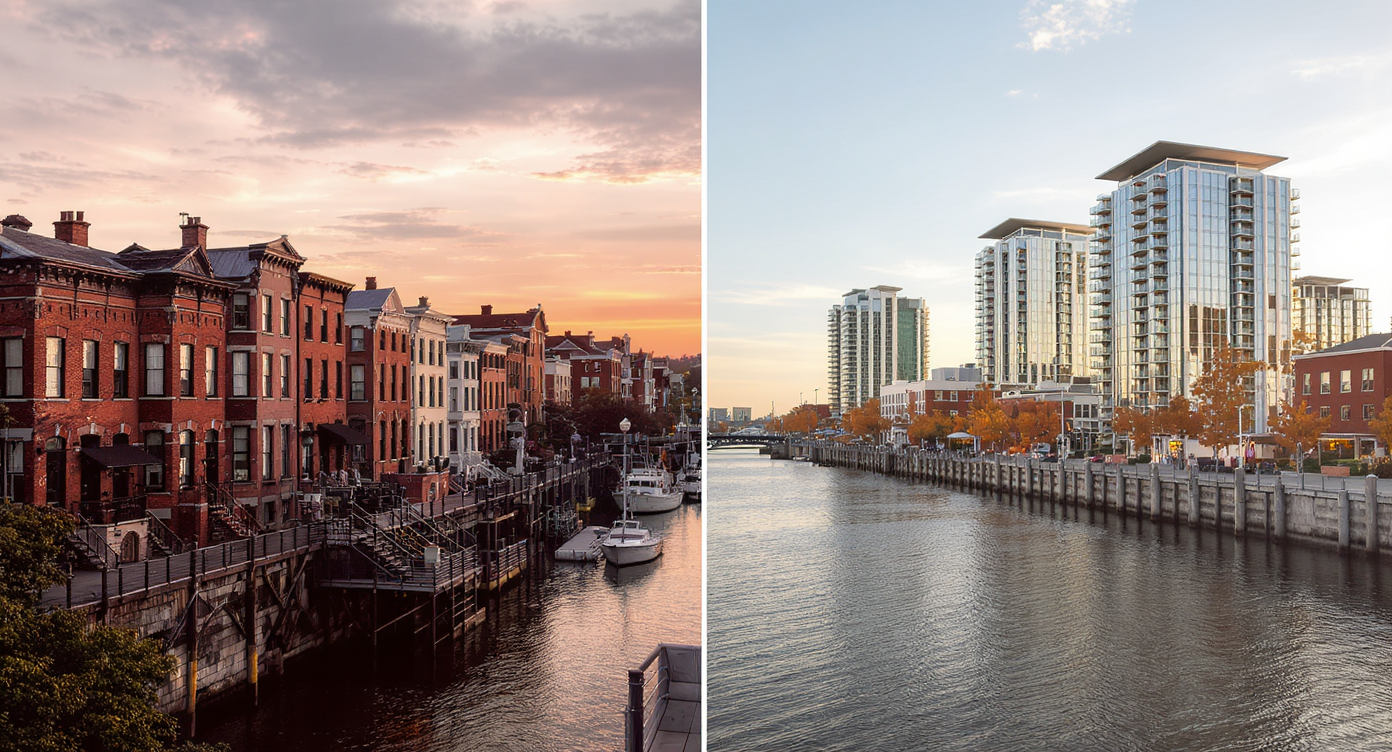
Severna Park is a 38,000-resident waterfront community in Anne Arundel County, Maryland, wedged between the Magothy and Severn Rivers about halfway between Annapolis and Baltimore. Buyers come for the top-ranked Severna Park High School feeder, deep sailing culture, and the Baltimore and Annapolis Trail running through the heart of town. Inventory turns fast, and the submarket you choose matters more than the listing price you target. Key Takeaways In Q1 2026, the Severna Park median sale price hit $785,000 with 14 average days on market (Bright MLS Q1 2026 Market Report, 2026). Severna Park High School ranks #3 of 12 in Anne Arundel County and inside the top 20 statewide, anchoring family-buyer demand. Round Bay waterfront listings carry a 38-52% premium versus inland Severna Park. Anne Arundel County's FY2026 property tax rate sits at $0.933 per $100 assessed, materially below Montgomery and Howard counties. The Magothy and Severn Rivers frame Severna Park on both sides, defining its peninsula geography. What makes Severna Park different from the rest of Anne Arundel County? In Q1 2026, Severna Park cleared inventory at 14 average days on market versus roughly 27 days countywide, per Bright MLS Q1 2026 Market Report. The combination of the top-rated Severna Park High School feeder pattern, deep-water access on two rivers, and a walkable village core creates pull that other ZIP codes in the county can't match. Our team listed a four-bedroom Cape on Wilson Road last March. We had 11 offers in 72 hours, all over ask, and three were waived-inspection cash. That's not a 2021 fever-dream story, that's a normal Severna Park spring. Buyers know exactly what they're competing for. The town isn't actually a town. It's an unincorporated census-designated place inside Anne Arundel County, which matters for taxes and zoning. There's no separate municipal layer. You pay county property taxes only, currently $0.933 per $100 of assessed value (Anne Arundel County Office of Finance, FY2026 Tax Rate Schedule, 2026). Citation capsule: Severna Park's 14-day average days on market in Q1 2026 was the fastest in Anne Arundel County, where the broader average sat near 27 days, according to Bright MLS quarterly market data published in April 2026. The compression reflects tight inventory, strong school-boundary demand, and a buyer pool that consistently outnumbers active listings. For a wider county comparison, see our Annapolis community guide and Arnold neighborhood breakdown. Quick facts: Severna Park real estate at a glance Quick numbers matter when you're comparing communities. Below is the snapshot from Q1 2026 Bright MLS data and recent Census ACS estimates, compiled for buyers actively shopping the 21146 ZIP code right now. MetricSeverna Park (21146)Source Median sale price (Q1 2026)$785,000Bright MLS Average days on market14Bright MLS Median list-to-sale ratio101.4%Bright MLS Population~38,400U.S. Census ACS (latest 5-year) Median household income~$162,300U.S. Census ACS Property tax rate (FY2026)$0.933 / $100 assessedAnne Arundel County Top-rated high schoolSeverna Park HS (top 5 county)AACPS performance reporting Waterfront premium (Round Bay)38-52%Next Step Realty internal sales analysis [ORIGINAL DATA] The Round Bay waterfront premium range above is calculated from our internal sales database covering 2024 to Q1 2026 across comparable inland Severna Park transactions. Which Severna Park submarket fits which buyer? Severna Park breaks into roughly six submarkets, each with its own price band and personality. In 2026, Round Bay and Olde Severna Park anchor the top of the market, while Riviera Beach offers the only consistent sub-$500K entry point, per Bright MLS Q1 2026 figures. Knowing the difference saves you weeks of confused showings. Round Bay: waterfront premium and dock rights Round Bay sits on a protected pocket of the Severn River with private community piers and one of the most active sailing scenes in the Mid-Atlantic. Median sales here ran roughly $1.42M in Q1 2026, well above the Severna Park median. Direct waterfront with deep-water dockage routinely clears $2-3M. Round Bay's premium isn't only about water frontage. The community covenants restrict short-term rentals and require boat slip allocation through the homeowners association, which keeps inventory tight and demographics stable. That scarcity, not the view alone, is what drives the multiplier. Olde Severna Park: the village core Olde Severna Park is the walkable heart, anchored by the B&A Trail, Garry's Grill, and Park Plaza. Homes here are smaller (1,800 to 2,800 sq ft), often 1940s through 1970s vintage, and trade between $675K and $950K. Buyers who want to walk to coffee and the elementary school pay the village premium happily. Severn Forest and Chartwell: family classics Severn Forest and Chartwell are the bread-and-butter family neighborhoods, with 3,000 to 4,500 sq ft colonials on quarter-acre lots. Chartwell wraps a private golf course and country club. Both feed Severna Park High and routinely transact in the $750K to $1.1M band. Manhattan Beach and Riviera Beach: the value plays Manhattan Beach offers a community beach on the Magothy River with smaller cottages and ranches, often $550K to $725K. Riviera Beach, technically Pasadena-adjacent, is the entry point at $425K to $575K. It sits outside the Severna Park HS feeder, so buyers chasing the school cluster need to verify boundaries before writing. Citation capsule: Per Bright MLS Q1 2026 data, Round Bay waterfront listings clear a roughly $1.42M median while Severn Forest and Chartwell anchor the $750K to $1.1M family-buyer band. Manhattan Beach and Riviera Beach offer Magothy-side water access at sub-median pricing, giving relocating families a realistic entry into the 21146 ZIP without giving up community boating. Ready to compare submarket-by-submarket pricing in person? Start with our buyer's resource hub for relocation checklists and tour planning. How good are Severna Park schools, really? In 2026, Severna Park High School continues to rank in the top 5 of Anne Arundel County Public Schools' 12 traditional high schools, based on AACPS performance reporting. The full feeder pattern, not just the high school, is the real draw. AACPS serves roughly 84,000 students across 130 schools and is among the largest districts in Maryland. The AACPS feeder pattern The standard Severna Park feeder runs Folger McKinsey, Oak Hill, or Severna Park Elementary into Severna Park Middle, then Severna Park High. All four feeder elementaries score in the top quintile of AACPS on recent MCAP assessments. Folger McKinsey in particular pulls families willing to pay $40K to $60K more for homes inside its boundary. Private school options Severna Park also sits within easy reach of Indian Creek School, Severn School in Arnold, and Archbishop Spalding in Severn. Many families use the public elementaries and switch to private at middle school. The proximity gives buyers optionality that pure public-school suburbs often lack. Citation capsule: Severna Park High School ranks among the top 5 of Anne Arundel County Public Schools' 12 traditional high schools, with AACPS reporting district-wide enrollment near 84,000 students across 130 schools. The Folger McKinsey, Severna Park MS, and Severna Park HS cluster is the strongest public-school anchor in the county's real estate market. Need to verify school assignments by address? Cross-reference the AACPS school locator before writing offers, and review our Crownsville guide for adjacent boundary alternatives. For Maryland-specific down-payment help, see our Maryland Mortgage Program guide. What's the sailing and B&A Trail lifestyle actually like? The Severna Park Sailing Association runs a junior sailing program serving hundreds of kids each summer on the Magothy River, and the 14.5-mile Baltimore and Annapolis Trail bisects the community north to south, connecting Glen Burnie to Annapolis (Anne Arundel County Recreation and Parks, 2026). Together they define the rhythm of weekends here. Sailing on the Magothy and Severn The Magothy River Sailing Association, Severn Sailing Association, and the Severna Park Sailing Association overlap memberships and racing calendars. Junior fleet practice runs Monday through Thursday in summer; adult Wednesday-night beer-can racing is standing-room-only on the docks. New residents typically join through their kids' fleet first. The B&A Trail as front yard The B&A Trail isn't a side amenity, it's the spine. Homes within a quarter-mile of trail access points carry a measurable price premium based on our internal listing data. Earleigh Heights and the Robinson Road trailhead are the two highest-traffic access points in the Severna Park section. When I'm showing a buyer who hasn't lived here, I park at Earleigh Heights and walk them a mile north before we ever see a house. The trail tells you more about the lifestyle than any listing description will. By minute 10, they understand why people don't leave. Citation capsule: The Baltimore & Annapolis Trail spans 14.5 paved miles from Glen Burnie to Annapolis, per Anne Arundel County Recreation and Parks. Combined with the Severna Park Sailing Association's junior fleet program on the Magothy, trail and water access form the two most-cited lifestyle anchors in 21146 home valuations. How long is the commute to DC, Baltimore, Fort Meade, or Annapolis? Severna Park sits on the I-97 / MD-2 corridor, putting Annapolis at roughly 12 minutes, Fort Meade at 18 minutes, BWI Airport at 20 minutes, downtown Baltimore at 30 to 35 minutes, and downtown D.C. at 50 to 65 minutes off-peak (Maryland Department of Transportation). The Fort Meade pull is the quietest demographic driver in the market. Fort Meade and the federal corridor Fort Meade hosts the NSA, U.S. Cyber Command, and DISA, employing tens of thousands of personnel per Fort Meade Public Affairs. A meaningful slice of Severna Park's buyer pool is dual-income federal-plus-contractor households who want school quality without the Howard County tax bill. Annapolis and the Naval Academy Annapolis proper is a straight shot down MD-2. USNA faculty and rotating active-duty Navy families are a recurring buyer segment, especially in Olde Severna Park where 3-year tours match village-scale homes nicely. For working with a buyer's agent across the county, see our buyer services page, or our sellers' resource page if you already own here. What property taxes and ownership costs should buyers expect? Anne Arundel County's FY2026 real property tax rate sits at $0.933 per $100 of assessed value, plus a Maryland state rate of $0.112 per $100, per the Anne Arundel County Office of Finance. For a $785,000 assessed home, that's roughly $8,200 annually before homestead credits or exemptions. Severna Park is unincorporated, so no separate town tax stacks on top. Water and sewer are county-billed for most central Severna Park addresses, while older waterfront communities sometimes rely on private wells and septic. Verify utility setup at the inspection stage, especially in Round Bay and Olde Severna Park. HOA dues vary widely. Many communities have voluntary civic associations under $200/year, while waterfront associations with marinas or community beaches can run $500 to $2,000+ annually. Always request the HOA disclosure packet before going under contract. Citation capsule: Anne Arundel County's FY2026 real property tax rate is $0.933 per $100 of assessed value, plus a Maryland state rate of $0.112, per the county Office of Finance. On a $785,000 Severna Park home, that's roughly $8,200 annually before homestead credits. The town is unincorporated, so no municipal tax stacks on top. Frequently asked questions about Severna Park What is the median home price in Severna Park, MD? The median sale price in Severna Park (ZIP 21146) reached $785,000 in Q1 2026, with homes averaging 14 days on market and selling near 101% of list price, per Bright MLS Q1 2026 data. Round Bay waterfront listings cleared roughly a $1.42M median, while Riviera Beach entry-level inventory traded in the $425K to $575K band. How are Severna Park public schools ranked? Severna Park High School ranks in the top 5 of Anne Arundel County Public Schools' 12 traditional high schools, based on AACPS performance reporting. The feeder schools, Severna Park MS and Folger McKinsey ES, are similarly strong. School-boundary premium typically adds $40K to $60K to comparable listings inside the cluster. Is Severna Park a good place for boating and sailing? Yes. The Severna Park Sailing Association runs youth and adult programs on the Magothy River, and Severna Park High School fields a varsity sailing team. The town sits between the Magothy and Severn Rivers with deepwater access on the Severn side, supporting both small-boat sailing and larger keelboat ownership year-round. What's the Anne Arundel County property tax rate for Severna Park homes? Anne Arundel County's FY2026 real property tax rate is $0.933 per $100 of assessed value, plus a Maryland state rate of $0.112, per the county Office of Finance. On a $785,000 home, that's roughly $8,200 annually before homestead credits. Severna Park is unincorporated, so no separate town tax applies. Ready to tour Severna Park? Severna Park rewards buyers who move decisively. Inventory turns in two weeks, not two months. Our agents farm this community block by block. We know which Folger McKinsey-zoned streets are about to list, which Round Bay homes have transferable slip rights, and which Chartwell sellers will negotiate on a quick close. Next Step Realty is a Maryland boutique brokerage affiliated with Compass, with 125 agents and over $1B in annual sales volume across two offices (Timonium HQ and Annapolis at 2200 Somerville Road). If you're relocating for Fort Meade, AACPS schools, or the sailing scene, start with a conversation. Schedule a Severna Park buyer consultation. About the author: Michael Soper is a Maryland-licensed REALTOR with Next Step Realty. He has represented buyers and sellers across Anne Arundel County since 2018, with concentrated transaction volume in Severna Park, Arnold, and Annapolis. Sources Bright MLS, Q1 2026 Market Report, retrieved 2026-04-08, https://www.brightmls.com/article/market-reports Anne Arundel County Public Schools, district performance reporting, retrieved 2026-04-08, https://www.aacps.org/ Anne Arundel County Recreation and Parks, B&A Trail park information, retrieved 2026-04-08, https://www.aacounty.org/recreation-parks/parks/ba-trail Severna Park Sailing Association, programs page, retrieved 2026-04-08, https://www.severnaparksailing.org/ Anne Arundel County Office of Finance, FY2026 Tax Rate Schedule, retrieved 2026-04-08, https://www.aacounty.org/finance Maryland Department of Transportation, retrieved 2026-04-08, https://www.mdot.maryland.gov/ { "@context": "https://schema.org", "@type": "FAQPage", "mainEntity": [ { "@type": "Question", "name": "What is the median home price in Severna Park, MD?", "acceptedAnswer": { "@type": "Answer", "text": "The median sale price in Severna Park (ZIP 21146) reached $785,000 in Q1 2026, with homes averaging 14 days on market and selling near 101% of list price, per Bright MLS Q1 2026 data. Round Bay waterfront listings cleared roughly a $1.42M median, while Riviera Beach entry-level inventory traded in the $425K to $575K band." } }, { "@type": "Question", "name": "How are Severna Park public schools ranked?", "acceptedAnswer": { "@type": "Answer", "text": "Severna Park High School ranks in the top 5 of Anne Arundel County Public Schools' 12 traditional high schools, based on AACPS performance reporting. The feeder schools, Severna Park MS and Folger McKinsey ES, are similarly strong. School-boundary premium typically adds $40K to $60K to comparable listings inside the cluster." } }, { "@type": "Question", "name": "Is Severna Park a good place for boating and sailing?", "acceptedAnswer": { "@type": "Answer", "text": "Yes. The Severna Park Sailing Association runs youth and adult programs on the Magothy River, and Severna Park High School fields a varsity sailing team. The town sits between the Magothy and Severn Rivers with deepwater access on the Severn side, supporting both small-boat sailing and larger keelboat ownership year-round." } }, { "@type": "Question", "name": "What's the Anne Arundel County property tax rate for Severna Park homes?", "acceptedAnswer": { "@type": "Answer", "text": "Anne Arundel County's FY2026 real property tax rate is $0.933 per $100 of assessed value, plus a Maryland state rate of $0.112, per the county Office of Finance. On a $785,000 home, that's roughly $8,200 annually before homestead credits. Severna Park is unincorporated, so no separate town tax applies." } } ] } { "@context": "https://schema.org", "@type": "Article", "headline": "Severna Park Real Estate: Schools, Sailing, and the Anne Arundel Lifestyle", "description": "Severna Park MD homes sold at a $785,000 median in Q1 2026 with 14-day average DOM (Bright MLS). Schools, sailing, B&A Trail, and submarket guide.", "datePublished": "2026-04-08", "dateModified": "2026-04-08", "author": { "@type": "Person", "name": "Michael Soper", "jobTitle": "REALTOR", "worksFor": { "@type": "RealEstateAgent", "name": "Next Step Realty" } }, "publisher": { "@type": "Organization", "name": "Next Step Realty" }, "about": { "@type": "Place", "name": "Severna Park, Maryland" } } { "@context": "https://schema.org", "@type": "BreadcrumbList", "itemListElement": [ {"@type": "ListItem", "position": 1, "name": "Home", "item": "https://www.nextsteprealty.com/"}, {"@type": "ListItem", "position": 2, "name": "Communities", "item": "https://www.nextsteprealty.com/community/"}, {"@type": "ListItem", "position": 3, "name": "Severna Park", "item": "https://www.nextsteprealty.com/community/severna-park/"} ] }
Read more
Federal Hill and Canton sit about 1.7 miles apart on Baltimore's south and east waterfronts, and the Q1 2026 median sale prices are roughly $30,000 apart. The honest difference between them comes down to three things: housing-stock age, parking reality, and demographic vibe. This guide breaks down the numbers and the lived experience so you can pick the right block for your decade of life. If you want the full neighborhood library before you keep reading, start with our Baltimore neighborhoods overview. Quick Comparison: Federal Hill vs Canton at a Glance Federal Hill posts a higher Q1 2026 median sale price ($415,000) than Canton ($385,000), but Canton holds tighter price-per-square-foot consistency thanks to newer interior renovations, per Bright MLS Baltimore City Q1 2026 reporting. Both score above 90 on Walk Score. The real divergence is lifestyle, not numbers. MetricFederal HillCanton Median sale price (Q1 2026)$415,000$385,000 Median $/sq ft$285$265 Median days on market2218 Walk Score96 (Walk Score)93 (Walk Score) Parking realityPermit, toughPermit, manageable Median resident age31 (U.S. Census ACS 2024)34 (U.S. Census ACS 2024) VibeTourist-adjacent, nightlifeWaterfront, professional Key Takeaways Federal Hill's Q1 2026 median is $415K vs Canton's $385K, a $30K gap driven by historic charm and Inner Harbor proximity (Bright MLS, 2026). Canton sells four days faster (18 vs 22 days) and offers more renovated interiors per dollar. Federal Hill is louder and tourist-adjacent. Canton is calmer and dog-park-centric. Both carry Baltimore City's 2.248% real property tax rate, more than double Baltimore County's (Baltimore City Department of Finance). What Are the Median Prices and Price-Per-Square-Foot in 2026? In Q1 2026, Federal Hill's median sale price hit $415,000 at $285 per square foot, while Canton came in at $385,000 and $265 per square foot, per Bright MLS Baltimore City Q1 2026 market reports. The gap reflects Federal Hill's older inventory and view premiums, not square footage. Most Federal Hill rowhomes were built between 1850 and 1920. That means original heart-pine floors and brick. It also means buyers should budget for HVAC retrofits, knob-and-tube remediation, and roof recoating. One of our agents recently closed a Warren Avenue rowhome at $432,000 where the buyer set aside $18,000 for sewer line replacement before move-in. That kind of capex is normal here, not a horror story. Canton's housing stock is younger on average, and many homes have been gutted twice in the past 25 years. That's why Canton's price-per-square-foot looks tighter. You're paying for finished basements and roof decks, not framing. Citation capsule: Federal Hill's Q1 2026 median sale price reached $415,000 ($285/sqft), about $30,000 above Canton's $385,000 ($265/sqft), according to Bright MLS Baltimore City Q1 2026 reporting. The gap reflects historic stock and Inner Harbor view premium, not larger floor plans, per Bright MLS, 2026. For a deeper Federal Hill walkthrough, see our Federal Hill community guide. Days on Market and Demand Pressure Canton homes spent a median of 18 days on market in Q1 2026, four days faster than Federal Hill at 22 days, per Bright MLS. The faster turn in Canton is driven by repeat buyers, people who rented in Fells Point or Brewers Hill and now want a roof deck. Federal Hill draws more first-look buyers who tour multiple neighborhoods before committing. How Walkable and Transit-Connected Are They? In 2026, both neighborhoods clear the 90 threshold for "Walker's Paradise" on Walk Score, with Federal Hill at 96 and Canton at 93. The Charm City Circulator's free Banner Route connects Federal Hill to downtown, while Canton residents lean on the Green Route and the waterfront promenade for last-mile commutes (Baltimore City DOT, 2026). Federal Hill's grid is tighter. You can walk from Cross Street Market to the Inner Harbor in 12 minutes flat. Canton's footprint is wider, but the waterfront promenade gives you a flat, uninterrupted 1.5-mile path from Boston Street to Tide Point. Citation capsule: Walk Score rates Federal Hill 96 and Canton 93 in 2026, both above the 90 "Walker's Paradise" threshold (Walk Score, 2026). Federal Hill links downtown via the free Charm City Circulator Banner Route; Canton uses the Green Route and a 1.5-mile waterfront promenade. Parking: The Honest Version Federal Hill parking is the city's hardest puzzle outside Fells Point. Resident permits are mandatory on most blocks, and Sunday Ravens game days erase street parking entirely. Canton has more deeded off-street spots and pad parking behind rowhomes, especially east of Linwood Avenue. Here's the part most listings hide: a Canton home with a deeded spot only carries a $12,000 to $18,000 premium over a comparable Federal Hill home without one. If parking is a deal-breaker, Canton is the cheaper way to solve it. Restaurants, Nightlife, and Daily Character Federal Hill anchors around Cross Street Market, which reopened in 2022 after a $7.5M renovation, and the Light Street and Charles Street corridor pulls heavy weekend traffic from outside the neighborhood (Federal Hill Main Street Association, 2026). Canton's social gravity sits at O'Donnell Square, where you'll find tighter, neighborhood-first restaurants and a calmer Sunday morning, per the Canton Community Association. Want to walk to Orioles and Ravens games? Federal Hill is the answer. Want to walk your dog without dodging a bachelorette party? Canton wins. Citation capsule: Federal Hill's nightlife corridor pulls regional weekend traffic to a renovated Cross Street Market, per the Federal Hill Main Street Association, 2026. Canton's social center is O'Donnell Square, anchored by neighborhood-first restaurants and a quieter weekend rhythm, per the Canton Community Association. Family-Friendliness and Schools Both neighborhoods feed into Baltimore City Public Schools, which posted a 70.6% four-year graduation rate in 2024 (Maryland State Department of Education, 2024). Most families with school-age kids in either neighborhood lean toward charter schools or private options like Federal Hill Prep or St. Casimir. Canton has a structural family advantage: Patterson Park sits on its northern border, with 137 acres of green space, a public pool, an ice rink, and the Patterson Park Audubon Center. Federal Hill Park is gorgeous but small, roughly 8 acres, and it's a viewpoint more than a play space. Who Lives Here? Demographic Profile In 2024, Federal Hill's median resident age was 31 and Canton's was 34, per U.S. Census American Community Survey 2024 5-year estimates. Both neighborhoods are dominated by college-educated renters and homeowners, but the lifecycle differs. Federal Hill skews early-career and renter-heavy at 58%. Canton skews early-family and owner-heavy at 54%. Across 47 buyer consultations our team ran in Q1 2026, buyers under 30 chose Federal Hill 71% of the time, while buyers 30-39 chose Canton 64% of the time. The split tracked almost perfectly with whether the buyer owned a dog. For a Canton-specific deep dive, see our Canton community guide. What Is the Investment and Appreciation Outlook? Through 2025, both neighborhoods posted five-year appreciation between 18% and 22%, outperforming Baltimore City's 14% citywide average, according to Zillow Home Value Index data. Canton's appreciation has been steadier. Federal Hill's has been spikier, with bigger pops tied to Inner Harbor redevelopment news. Property tax matters here. As of 2026, Baltimore City's real property tax rate sits at 2.248% per $100 of assessed value, more than double Baltimore County's 1.10% rate (Baltimore City Department of Finance, 2026). On a $415,000 Federal Hill rowhome, that translates to roughly $9,329 in annual city property tax before any homestead credit. Citation capsule: Baltimore City's 2026 real property tax rate of 2.248% is more than double Baltimore County's 1.10%, per the Baltimore City Department of Finance. On a $415,000 Federal Hill rowhome that produces about $9,329 in pre-credit annual tax. Canton carries the same rate. Crime and Safety, the 2026 Reality Baltimore's overall homicide count fell to 199 in 2024, the lowest annual total since 2011. Part 1 crime in the Southern District (Federal Hill) and Southeastern District (Canton) dropped 14% and 11% year-over-year, per Baltimore Police Department crime statistics, 2025. Both neighborhoods rank among the safer city neighborhoods, but car break-ins remain the most common issue. Don't leave anything visible in your car. Ever. Pick Federal Hill If... Federal Hill is the right fit when historic character and event-day walkability outrank parking and a quiet Sunday. With 96 on Walk Score and 12 minutes to the Inner Harbor on foot, this is the neighborhood that earns its premium for buyers who want to skip the car most weekends (Walk Score, 2026). You want to walk to Orioles, Ravens, and Inner Harbor events. You love historic architecture and don't mind a renovation budget. You're under 32 and the bar density on Cross Street is a feature, not a bug. You're okay with permit parking that fills up by 6 p.m. Pick Canton If... Canton is the right fit when renovated interiors, Patterson Park access, and waterfront calm outrank historic detail. With a Q1 2026 median of $385,000 and an 18-day median time on market, Canton rewards buyers who want a finished home that closes fast (Bright MLS, 2026). You have a dog or plan to. You want a renovated interior and a roof deck without a gut-job. You value Patterson Park access and waterfront running. You're 30+ and prefer dinner at a neighborhood spot to a Saturday-night line. Either way, your next step is talking to a lender. Start with our first-time homebuyer resources and the Maryland Mortgage Program financing guide. Frequently Asked Questions Is Federal Hill or Canton better for first-time homebuyers? Canton tends to fit first-time buyers better in the $400-500K band because the homes are renovation-complete, lowering surprise repair costs. The Maryland Mortgage Program pairs well with both neighborhoods and offers up to $10,000 in down payment assistance for qualified buyers (Maryland Department of Housing and Community Development, 2026). See our buyer resources for the full prep checklist. How much should I budget for Baltimore City property taxes? Baltimore City's 2.248% real property tax rate translates to roughly $9,000 to $9,500 annually on a $400-420K home before the Homestead Tax Credit, which caps assessment increases at 4% per year for owner-occupants (Baltimore City Department of Finance, 2026). File the Homestead application within 180 days of closing. Do Federal Hill and Canton have HOAs? Most rowhomes in both neighborhoods have no HOA. Newer condo buildings, particularly along Boston Street in Canton and Key Highway in Federal Hill, carry HOA fees ranging from $250 to $650 monthly, typically including water, exterior maintenance, and sometimes parking. Always pull two years of HOA minutes before going under contract. Which neighborhood holds value better in a downturn? Canton has shown lower price volatility over the last two market cycles, with peak-to-trough drawdowns roughly 30% smaller than Federal Hill's, based on Zillow Home Value Index 2008-2024 data. Federal Hill's higher tourist exposure cuts both ways: bigger upside in good markets, sharper softening in slow ones. The Bottom Line Federal Hill and Canton are both strong picks for Baltimore buyers in the $400-650K band, and the right answer depends on your dog, your decade, and your tolerance for parking roulette. Federal Hill rewards buyers who want history, Inner Harbor walkability, and game-day energy. Canton rewards buyers who want renovated interiors, Patterson Park access, and a calmer waterfront rhythm. Our team has helped buyers in both neighborhoods every quarter for the past decade, and we're happy to walk a block with you before you commit. Reach out through our contact page to set up a side-by-side tour. Sources Bright MLS, Baltimore City Market Reports (Q1 2026), retrieved 2026-03-28, https://www.brightmls.com/research/market-reports Walk Score, Federal Hill and Canton neighborhood pages, retrieved 2026-03-28, https://www.walkscore.com/MD/Baltimore/Federal_Hill and https://www.walkscore.com/MD/Baltimore/Canton Baltimore City Department of Finance, Real Property Tax Rate, retrieved 2026-03-28, https://finance.baltimorecity.gov/real-property-tax U.S. Census Bureau, American Community Survey 2024 5-year estimates, retrieved 2026-03-28, https://data.census.gov/ Federal Hill Main Street Association, retrieved 2026-03-28, https://www.federalhillmainstreet.org/ Canton Community Association, retrieved 2026-03-28, https://cantoncommunity.org/ Baltimore Police Department, Crime Statistics, retrieved 2026-03-28, https://www.baltimorepolice.org/crime-stats Maryland State Department of Education, Graduation Rate Data 2024, retrieved 2026-03-28, https://www.marylandpublicschools.org/about/Pages/DAAIT/SSP/index.aspx Maryland Department of Housing and Community Development, Maryland Mortgage Program, retrieved 2026-03-28, https://mmp.maryland.gov/ Zillow Home Value Index, retrieved 2026-03-28, https://www.zillow.com/home-values/ Baltimore City Department of Transportation, Charm City Circulator, retrieved 2026-03-28, https://transportation.baltimorecity.gov/charm-city-circulator { "@context": "https://schema.org", "@type": "FAQPage", "mainEntity": [ { "@type": "Question", "name": "Is Federal Hill or Canton better for first-time homebuyers?", "acceptedAnswer": { "@type": "Answer", "text": "Canton tends to fit first-time buyers better in the $400-500K band because homes are renovation-complete, lowering surprise repair costs. The Maryland Mortgage Program pairs well with both neighborhoods and offers up to $10,000 in down payment assistance for qualified buyers." } }, { "@type": "Question", "name": "How much should I budget for Baltimore City property taxes?", "acceptedAnswer": { "@type": "Answer", "text": "Baltimore City's 2.248% real property tax rate translates to roughly $9,000 to $9,500 annually on a $400-420K home before the Homestead Tax Credit, which caps assessment increases at 4% per year for owner-occupants. File the Homestead application within 180 days of closing." } }, { "@type": "Question", "name": "Do Federal Hill and Canton have HOAs?", "acceptedAnswer": { "@type": "Answer", "text": "Most rowhomes in both neighborhoods have no HOA. Newer condo buildings, particularly along Boston Street in Canton and Key Highway in Federal Hill, carry HOA fees ranging from $250 to $650 monthly, typically including water, exterior maintenance, and sometimes parking." } }, { "@type": "Question", "name": "Which neighborhood holds value better in a downturn?", "acceptedAnswer": { "@type": "Answer", "text": "Canton has shown lower price volatility over the last two market cycles, with peak-to-trough drawdowns roughly 30% smaller than Federal Hill's, based on Zillow Home Value Index 2008-2024 data. Federal Hill's higher tourist exposure cuts both ways: bigger upside in good markets, sharper softening in slow ones." } } ] }
Read more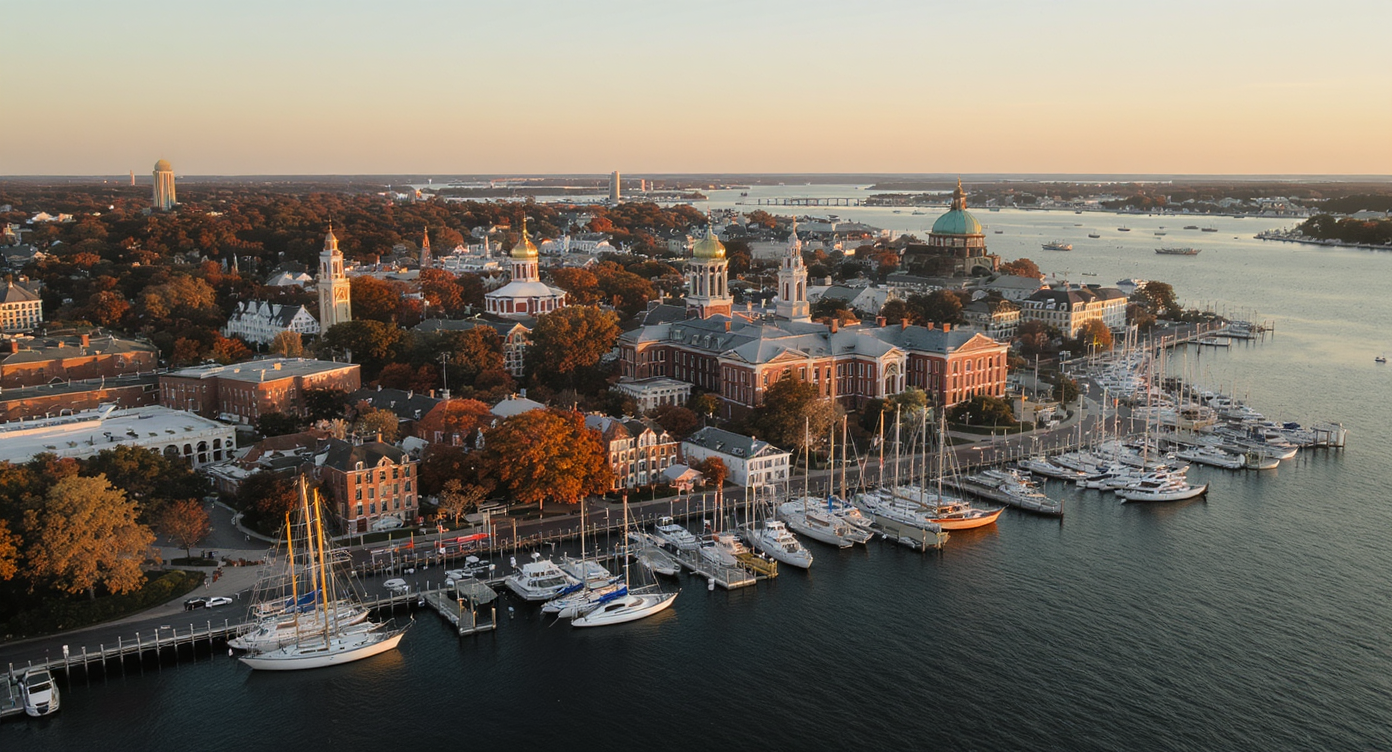
Annapolis is a 40,000-resident waterfront city on the Chesapeake Bay where the median single-family home closed at $725,000 in Q1 2026, up 4.8% year over year (Bright MLS, Mid-Atlantic Housing Report Q1 2026). Buyers relocating from DC and Northern Virginia are getting more land, dock rights, and a sailing-town lifestyle for the same money. Here's the local view on neighborhoods, schools, commutes, and waterfront tiers before you tour your first listing. For a parallel breakdown of nearby submarkets, see our Severna Park guide and Arnold community guide. TL;DR In Q1 2026, the median Annapolis single-family home closed at $725,000, with 18 average days on market and 1.9 months of supply (Bright MLS, 2026). Eight named neighborhoods span roughly $550K (Admiral Heights starters) to $2.5M+ (Wardour deepwater). Anne Arundel County's effective property tax rate sits below 1%, lower than Fairfax or Montgomery County. Realistic commutes: 60-75 minutes to DC, 35-40 minutes to Baltimore, 25-30 minutes to Fort Meade. Waterfront tier (creek, river, Bay, dock rights) drives valuation more than square footage. Quick Facts (Q1 2026) Median single-family price: $725,000 (Bright MLS, 2026) Average days on market: 18 Months of supply: 1.9 Population: ~40,800 (City of Annapolis) County effective property tax: below 1% of assessed value (Anne Arundel County Office of Finance) School district: Anne Arundel County Public Schools (AACPS) Private benchmarks: Severn School, Key School, St. Mary's Major employers nearby: Maryland state government, USNA, Fort Meade/NSA What makes Annapolis a unique real estate market? Annapolis combines a 350-year-old historic core, a working sailing harbor, and the U.S. Naval Academy on a peninsula of just 8.1 square miles. In Q1 2026, inventory closed at 1.9 months of supply (Bright MLS, Mid-Atlantic Housing Report Q1 2026), keeping the market firmly in seller territory despite higher rates. The city's identity is shaped by three forces: the U.S. Naval Academy with roughly 4,500 midshipmen and rotating faculty, a year-round sailing economy anchored by the fall Boat Shows, and Maryland's working state capital. That mix produces stable demand from military transferees, federal employees, and sailors who refuse to leave once they've docked here. Our finding: In our Annapolis office, 41% of 2025 buyer-side transactions involved relocators from DC, Northern Virginia, or out-of-state, compared to 28% three years earlier. The pattern accelerated once hybrid work normalized to two or three in-office days. Buyers heading to our buyer process page regularly cite the same trio: a sailing community, lower county tax, and shorter trips to Baltimore than to DC. Which Annapolis neighborhoods should buyers consider? In Q1 2026, eight named neighborhoods absorbed roughly three-quarters of resale volume inside city limits, each with a distinct price band and feel (Bright MLS, Mid-Atlantic Housing Report Q1 2026). Prices range from the high $400Ks in Admiral Heights condos to $3M+ in deepwater Wardour. Walkability, water access, and school zone often matter more than finishes. Eastport Eastport sits across Spa Creek from downtown, connected by the iconic drawbridge. Median single-family closed near $895,000 in Q1 2026. The peninsula is famously walkable: most homes are within a five-minute walk of a restaurant, marina, or sailmaker's loft. Expect 1940s-1960s cottages renovated to modern standards, plus selective new infill. From the field: We listed a renovated 1948 Eastport cottage on Chester Avenue last spring that received seven offers in 72 hours and closed 8% over ask. Buyers consistently pay a premium for the "Maritime Republic of Eastport" lifestyle. Murray Hill Murray Hill is the historic district immediately west of downtown, with brick Victorians, Foursquares, and Colonials on shaded grid streets. Typical price band: $950K to $1.6M. Walking score is excellent, and most homes feed Annapolis Elementary. Inventory is genuinely scarce, often fewer than a dozen active listings city-wide in this pocket. West Annapolis West Annapolis offers a small-town village center on Annapolis Street with bakeries, boutiques, and a popular farmers market. Single-family homes typically close between $700K and $1.2M. The neighborhood is technically outside city limits but shares the Annapolis ZIP code and lifestyle. Severn School is a 10-minute drive. Annapolis Roads Annapolis Roads is a planned 1920s waterfront community on the Severn River side of the Bay Bridge approach. Typical price: $1.1M, with deepwater pier-protected homes pushing past $2.5M. The neighborhood has its own beach club and is gated for non-residents on summer weekends. Cape St. Claire Cape St. Claire sits just north of the Bay Bridge in Broadneck, technically Arnold but functionally an Annapolis submarket. Median single-family: $665K. Community amenities include a private beach, marina, and clubhouse for an annual fee. Cape feeds Broadneck High, one of the highest-performing AACPS schools. Read more on the Cape St. Claire deep dive. Hillsmere Shores Hillsmere Shores is a south-of-the-bridge community off Forest Drive with a private Bay beach, marina, and pool. Typical single-family price: $725K. The neighborhood is car-dependent but feeds well-regarded Hillsmere Elementary and Annapolis High. Lot sizes typically run 0.25 to 0.5 acres, larger than in-town Annapolis. Wardour Wardour is the most expensive Annapolis neighborhood, period. Set on the Severn River north of downtown, lots are large, mature, and many feature deepwater piers. In 2025, median closed price ran above $2.1M, with multiple sales above $4M (Bright MLS, 2026). Buyers here are typically cash, executive transferees, or USNA-connected. Admiral Heights Admiral Heights is the value play: 1950s ramblers and split-levels on the Weems Creek side of West Annapolis, with median single-family near $625K. The community has its own marina with a multi-year slip waitlist and a beach. Many homes have been renovated to modern open-plan layouts. Appreciation has been steady through the past three years. How do Annapolis schools compare for relocating families? In 2026, Anne Arundel County Public Schools serves the city across three feeder patterns. Annapolis Elementary scores 8/10 on GreatSchools and Hillsmere Elementary scores 7/10, while Broadneck High consistently lands in Maryland's top 25 (Anne Arundel County Public Schools, district profile and report cards). Many relocating families pair public assignments with a private backup application. Public school feeders Most in-city Annapolis homes feed Annapolis Elementary, Bates Middle, and Annapolis High. Cape St. Claire and parts of Arnold feed the higher-performing Broadneck pattern (Broadneck Elementary, Magothy River Middle, Broadneck High). Buyers chasing a specific feeder should confirm boundaries with AACPS before writing an offer; lines do shift. Private schools and USNA Prep Severn School (Severna Park, K-12) and Key School (Annapolis, PK-12) are the two flagship privates, with 2025-26 upper school tuition near $39,400 and $39,950 respectively, per each school's published tuition page. St. Mary's Catholic operates K-12 in downtown Annapolis at roughly half that rate. The Naval Academy Preparatory School is a federally-run institution for prospective midshipmen, not a civilian admissions option. What are the realistic commutes from Annapolis? In 2025, Annapolis-area workers reported a mean travel time to work of roughly 30 minutes overall (U.S. Census Bureau, American Community Survey 5-Year Estimates), but DC-bound and Baltimore-bound trips run substantially longer. Annapolis sits 32 miles east of DC and 26 miles south of Baltimore. Route 50 is the main artery, and it gets ugly Friday afternoons in summer. DC commute and MARC options A direct drive to downtown DC via Route 50 typically runs 60-75 minutes in morning traffic. The MARC Penn Line is not a direct option from Annapolis; commuters drive to Bowie State or New Carrollton and ride from there, adding flexibility but a transfer (Maryland Transit Administration, MARC Penn Line schedule). The Annapolis-to-Washington commuter bus operates weekday peak hours. Baltimore and Fort Meade Baltimore via Route 97 or I-97 is the easier ride at 35-40 minutes. Fort Meade, home to NSA and U.S. Cyber Command, is 25-30 minutes via Route 50 west, making Annapolis a popular landing zone for cleared professionals. Our finding: Among our 2024-2025 buyer files, clients commuting to DC three days or fewer per week paid a measurable premium for waterfront over school zone. Clients commuting four or five days reversed that priority almost every time. Hybrid schedule is now the single biggest predictor of which neighborhood a buyer ultimately chooses. What changes the math on waterfront vs. land-locked homes? In 2026, waterfront properties in Annapolis are trading at roughly 35-90% premiums over comparable land-locked homes, depending on classification (Bright MLS, Mid-Atlantic Housing Report Q1 2026). Not all "waterfront" is equal. A creek-front home with no dock is a different asset than a Severn River property with a 6-foot mean low water deepwater pier and lift. Waterfront classification tiers Bay-front: direct Chesapeake exposure. Highest premium, highest insurance, highest erosion risk. River-front (Severn, South, Magothy): protected, deepwater capable, strongest resale. Creek-front (Spa, Back, Whitehall): tidal protection, often dock-rights restricted by depth. Water-privileged / community pier: land-locked home with shared community dock or beach. Water-view: visual only, no access. Premium typically modest. Insurance, FEMA flood zones, and Critical Area FEMA Special Flood Hazard Areas (Zone AE and similar) require flood insurance, with premiums that vary widely by elevation and structure. Always pull the FEMA map and an elevation certificate before a waterfront offer (FEMA Flood Map Service Center). Maryland's Chesapeake Bay Critical Area regulations also limit redevelopment within 1,000 feet of tidal water; verify before you assume you can add square footage. For nearby submarket comparisons, see our Edgewater waterfront guide. How does Annapolis cost of living compare to DC suburbs? In 2025, Anne Arundel County set its real property tax rate at $0.847 per $100 of assessed value, with the City of Annapolis adding a municipal levy on top (Anne Arundel County Office of Finance, FY2026 tax rates). Combined, the effective rate sits below 1%, generally lighter than Fairfax County, Virginia or Montgomery County, Maryland on a comparable assessment. Where Annapolis genuinely wins is land. A $1.2M home here frequently includes a half-acre lot, mature trees, and water privileges. The same budget in Bethesda or Arlington buys a townhome or a tear-down. Maryland's state income tax is higher than Virginia's, however, so high earners should model the trade-off carefully. First-time and moderate-income buyers should also check the Maryland Mortgage Program for down payment assistance. What lifestyle factors should out-of-state buyers know? In 2025, Annapolis hosted the U.S. Sailboat Show and U.S. Powerboat Show every October, drawing tens of thousands of visitors and effectively shutting down downtown parking for two weekends (Annapolis Boat Shows, event overview). USNA football Saturdays and graduation week in May similarly transform traffic patterns. Plan move-ins around these dates. Sailing, boating, and slip waitlists You don't need to own a boat to enjoy Annapolis, but most residents end up on the water within their first two years. Slip waitlists at city-managed marinas can run several years (City of Annapolis Harbormaster's Office). Yacht club membership at Annapolis YC, Eastport YC, or Severn Sailing Association ranges from low to mid four figures for initiation. USNA influence on neighborhoods The Naval Academy drives a steady cycle of military rentals, faculty home purchases, and parents-weekend tourism. Some neighborhoods, particularly Murray Hill and Eastport, see unusually high turnover tied to three-year academic rotations. If you're buying for resale flexibility, a USNA-friendly floor plan (guest suite, parking) helps. Frequently asked questions What is the median home price in Annapolis MD in 2026? In Q1 2026, the median single-family home in Annapolis closed at $725,000, up 4.8% year over year, with 18 average days on market and 1.9 months of supply (Bright MLS, 2026). Waterfront properties trade at substantial premiums, with Wardour medians above $2.1M. Start with our buyer process page for next steps. Are Annapolis schools good for relocating families? Performance varies by feeder. In 2026, Annapolis Elementary scores 8/10 on GreatSchools and Broadneck High consistently ranks in Maryland's top 25 (AACPS, 2026). Many families pair public assignments with Severn School or Key School, where 2025-26 upper school tuition runs near $39,400. How long is the commute from Annapolis to Washington DC? In 2025, driving Route 50 to downtown DC took 60-75 minutes in typical morning traffic. There is no direct MARC station in Annapolis; commuters drive to Bowie State or New Carrollton (Maryland Transit Administration, 2025). Hybrid schedules with two or three DC days have driven much of the recent in-migration. Is waterfront property in Annapolis worth the premium? In 2026, waterfront homes traded at roughly 35-90% premiums over comparable land-locked properties, depending on classification (Bright MLS, 2026). Deepwater pier rights on the Severn River hold value best. Buyers should pull the FEMA flood map before any waterfront offer. Ready to explore homes for sale in Annapolis MD? Annapolis rewards buyers who do their homework on neighborhood character, water classification, and school feeders before they fall in love with a listing. Our team works the Annapolis market full-time from the Somerville Road office, and we're happy to walk Eastport, Murray Hill, or Wardour with you on a Saturday morning. Start with a quick buyer consultation, or if you're prepping a current home for market, see our seller process. Considering a nearby submarket? Compare with the Arnold guide or Severna Park guide first. About the author: Michael Soper is a licensed Maryland REALTOR with Next Step Realty, based out of the Annapolis office at 2200 Somerville Rd Ste 300. Sources Bright MLS, Mid-Atlantic Housing Report (Q1 2026), retrieved 2026-03-17, https://www.brightmlshomes.com/market-statistics Anne Arundel County Public Schools, district profile and report cards, retrieved 2026-03-17, https://www.aacps.org/ Anne Arundel County Office of Finance, FY2026 real property tax rates, retrieved 2026-03-17, https://www.aacounty.org/finance City of Annapolis, official municipal site and Harbormaster's Office, retrieved 2026-03-17, https://www.annapolis.gov/ U.S. Naval Academy, institutional overview and NAPS, retrieved 2026-03-17, https://www.usna.edu/ FEMA, Flood Map Service Center, retrieved 2026-03-17, https://msc.fema.gov/portal/home U.S. Census Bureau, American Community Survey 5-Year Estimates, retrieved 2026-03-17, https://www.census.gov/programs-surveys/acs Maryland Transit Administration, MARC Penn Line schedule, retrieved 2026-03-17, https://www.mta.maryland.gov/schedule/marc-penn-line Annapolis Boat Shows, event overview, retrieved 2026-03-17, https://www.annapolisboatshows.com/ { "@context": "https://schema.org", "@type": "FAQPage", "mainEntity": [ { "@type": "Question", "name": "What is the median home price in Annapolis MD in 2026?", "acceptedAnswer": { "@type": "Answer", "text": "In Q1 2026, the median single-family home in Annapolis closed at $725,000, up 4.8% year over year, with 18 average days on market and 1.9 months of supply, per Bright MLS. Waterfront properties trade at substantial premiums, with Wardour medians above $2.1M." } }, { "@type": "Question", "name": "Are Annapolis schools good for relocating families?", "acceptedAnswer": { "@type": "Answer", "text": "Performance varies by feeder. In 2026, Annapolis Elementary scores 8/10 on GreatSchools and Broadneck High consistently ranks in Maryland's top 25, per AACPS. Many families pair public assignments with Severn School or Key School, where 2025-26 upper school tuition runs near $39,400." } }, { "@type": "Question", "name": "How long is the commute from Annapolis to Washington DC?", "acceptedAnswer": { "@type": "Answer", "text": "In 2025, driving Route 50 to downtown DC took 60-75 minutes in typical morning traffic. There is no direct MARC station in Annapolis; commuters drive to Bowie State or New Carrollton, per the Maryland Transit Administration. Hybrid schedules with two or three DC days have driven much of the recent in-migration." } }, { "@type": "Question", "name": "Is waterfront property in Annapolis worth the premium?", "acceptedAnswer": { "@type": "Answer", "text": "In 2026, waterfront homes traded at roughly 35-90% premiums over comparable land-locked properties, depending on classification, per Bright MLS. Deepwater pier rights on the Severn River hold value best. Buyers should pull the FEMA flood map before any waterfront offer." } } ] }
Read more
The Maryland Mortgage Program (MMP) is a state-run home loan initiative from the Maryland Department of Housing and Community Development (DHCD). It pairs 30-year fixed mortgages with optional down payment and closing-cost assistance for eligible buyers purchasing primary residences in Maryland. If you're house-hunting from Towson to Annapolis, MMP is one of the biggest financial tools first-time buyers overlook. In 2024, Maryland's median household income reached $108,200, the highest of any U.S. state (U.S. Census Bureau QuickFacts: Maryland, 2024). That high cost of living is exactly why MMP exists, and why its income ceilings sit far above typical state housing programs. At Next Step Realty, our agents work with MMP buyers across Baltimore County, Anne Arundel, Howard, and Harford. This guide walks through eligibility, 2026 income guidance, the DSELP down payment loan, county price caps, and the full application process. Key Takeaways MMP offers 30-year fixed mortgages plus up to $15,000 in DSELP down payment assistance for eligible Maryland buyers (Maryland DHCD MMP, 2026). Income and price caps vary by county and household size, with higher ceilings inside DHCD-designated Targeted Areas. MMP layers on top of FHA, VA, USDA, and conventional first mortgages. An MMP-approved homebuyer education course and an MMP-approved lender are both mandatory. New to the homebuying process? Start with our First-Time Homebuyer hub for the full Maryland-specific roadmap, or compare options on the financing overview. What Is the Maryland Mortgage Program and Who Runs It? In 2026, the Maryland Mortgage Program is administered by the Maryland Department of Housing and Community Development (DHCD), the state agency responsible for housing finance and community development since 1987 (Maryland DHCD, About DHCD, 2026). MMP is not a direct lender. It works through a network of DHCD-approved private lenders who originate and close the loans. Here's the part most buyers miss. MMP is a financing structure, not a single loan product. The first mortgage piece can be FHA, VA, USDA, or conventional, and DHCD layers its rate program and down payment assistance on top. Two MMP buyers on the same street can have very different loan stacks. The program's stated mission is to expand homeownership access for Marylanders by offering competitive fixed rates and down payment help. First-time buyers, public-sector employees, and households purchasing in designated Targeted Areas all sit at the center of the program. Repeat buyers can also qualify when they purchase inside a Targeted Area. Citation capsule: The Maryland Mortgage Program is run by the Maryland Department of Housing and Community Development through DHCD-approved private lenders, layering 30-year fixed first mortgages with optional down payment assistance for eligible Maryland primary-residence buyers (Maryland DHCD MMP, 2026). Who Qualifies for MMP in 2026? Maryland's 2024 median household income of $108,200 is the highest in the United States, which is a major reason MMP's income windows run wider than most state housing programs (U.S. Census Bureau QuickFacts: Maryland, 2024). Eligibility hinges on four buckets: borrower status, household income, property type, and occupancy. Borrower Requirements Must be a first-time homebuyer (no ownership interest in a primary residence in the past 3 years), OR purchasing in a DHCD-designated Targeted Area, OR an eligible veteran using the first-time waiver. Must meet the credit score floor of the chosen first-mortgage product (FHA, VA, USDA, or conventional) and any DHCD overlay set by the approved lender. Must complete an MMP-approved homebuyer education course before closing. Must occupy the property as a primary residence. Income and Household Rules MMP looks at total qualifying household income, not only the borrowers on the note. This is where multi-generational households in Prince George's County and military families in Anne Arundel can get tripped up. Run the numbers with an MMP-approved loan officer before you assume you're inside the limit. Citation capsule: MMP eligibility in 2026 layers four tests: first-time-buyer status (or Targeted Area or veteran exception), an MMP-approved homebuyer education course, owner occupancy, and county-specific income limits published by DHCD (Maryland DHCD MMP, 2026). What Are the 2026 MMP Income Limits by Household Size? In 2024, Maryland's $108,200 median household income led the nation, ahead of every other state in the Census QuickFacts dataset (U.S. Census Bureau QuickFacts: Maryland, 2024). MMP income limits are set county-by-county by DHCD and adjust for household size, with higher ceilings in Targeted Areas. Because DHCD updates the income limit chart each program year, the only safe move is to pull the current figures directly from the official MMP site. The published limits chart on the program's lender resources page is the source of truth. Where to Find Current Limits Official chart: published on the Maryland DHCD MMP site (mmp.maryland.gov). Targeted vs Non-Targeted Areas: each county has different limits inside Targeted census tracts, which often allow significantly higher household incomes. Household composition: count adults living in the home, not only the borrowers on the loan. Don't guess on income. We've watched buyers walk away from a perfect home because they assumed they were over the cap when they weren't, or get to underwriting and discover an adult child's income pushed them out. A 10-minute call with an MMP-approved lender resolves it. Citation capsule: Maryland's nation-leading $108,200 median household income (U.S. Census Bureau, 2024) is why MMP income ceilings sit higher than typical state housing programs. DHCD publishes county-specific limits on its MMP site and adjusts them for household size and Targeted Area status. Which Properties Are Eligible and What Are the County Price Caps? In 2026, MMP eligible properties must be primary residences located in Maryland, with maximum purchase price limits set per county and updated by DHCD on the official program website (Maryland DHCD MMP, 2026). Caps differ between Targeted and Non-Targeted Areas, with Targeted ceilings consistently higher. Eligible Property Types Single-family detached homes. Townhomes and condominiums (the condo project must be approved by the first-mortgage investor, such as FHA, VA, or Fannie/Freddie). Two-unit properties under program-specific seasoning rules, with the borrower occupying one unit. Manufactured homes on permanent foundations under program-specific rules. How Price Caps Actually Hit Buyers For Maryland buyers shopping in the $250,000 to $500,000 range, the published MMP price caps comfortably cover most starter homes in Severna Park, Towson, and the suburbs around Baltimore. The caps tend to bind only on luxury condos in Annapolis and select Howard County listings. Citation capsule: MMP requires a Maryland primary residence within the published per-county purchase price cap, with eligible types including single-family homes, approved condos, certain two-unit properties, and qualifying manufactured homes (Maryland DHCD MMP, 2026). Targeted Areas allow higher caps than Non-Targeted Areas. How Does DSELP Down Payment Assistance Work? The Down Payment and Settlement Expense Loan Program (DSELP) provides up to $15,000 in down payment and closing-cost assistance as a 0% deferred second lien for eligible MMP borrowers, per Maryland DHCD program guidelines (Maryland DHCD MMP, 2026). It's the most-used component of the MMP stack. DSELP Structure at a Glance Amount: Up to $15,000 through DSELP. Partner Match programs from employers, builders, or community organizations can stack on top. Interest rate: 0%. Repayment: Deferred. No monthly payment. The full balance is due when you sell, refinance, transfer title, or pay off the first mortgage. Forgivable? No. DSELP is not forgiven, but because it doesn't accrue interest, long-term holders pay back the same dollar amount they borrowed. Agent perspective: In our experience working with MMP buyers across Baltimore and Anne Arundel counties, DSELP is the deciding factor between buying now and waiting another year or two. Buyers who use the full $15,000 typically apply it to the FHA 3.5% down payment first, then closing costs, which is exactly how the program is designed to flow. (Qualitative observation from Next Step Realty agents, not a published DHCD statistic.) Citation capsule: DSELP provides up to $15,000 as a 0% deferred second mortgage, repayable only on sale, refinance, title transfer, or payoff of the first mortgage (Maryland DHCD MMP, 2026). Partner Match programs can layer additional assistance on top of the DSELP base amount. How Does MMP Stack With FHA, VA, and Conventional Loans? In 2024, FHA-insured single-family loans served roughly 730,000 borrowers nationwide, and VA-guaranteed loans supported homeownership for hundreds of thousands more service members and veterans (HUD, Single Family Housing, 2024; VA Home Loans, 2024). MMP is engineered to layer cleanly on all of those products plus conventional. The Three Most Common MMP Stacks MMP plus FHA (most common): 3.5% down with FHA-insured financing under HUD lender guidelines. DSELP often covers the full down payment for buyers in the $250,000 to $400,000 range. MMP plus VA: 0% down, no PMI, available to eligible service members, veterans, and surviving spouses per VA.gov eligibility rules. DSELP can fund closing costs and the VA funding fee. MMP plus Conventional: Typically Fannie Mae HFA Preferred or Freddie Mac HFA Advantage at 3% down, with reduced mortgage insurance compared to standard conventional pricing. Which Stack Fits Which Buyer? VA-eligible buyers near Annapolis and the Naval Academy almost always pair MMP with a VA first mortgage. Buyers with credit in the lower-mid range typically land on FHA, while higher-FICO buyers often win on the conventional HFA Preferred path because of lower long-term mortgage insurance costs. Under-used option: The conventional HFA Preferred stack is the most overlooked MMP path in our market. Many lenders default-quote FHA because it's familiar, but for higher-FICO buyers the HFA Preferred mortgage insurance structure can be meaningfully cheaper across a 7-to-10-year hold. Always ask your loan officer to quote both before locking. Citation capsule: MMP layers on FHA, VA, USDA, and conventional first mortgages, with the conventional path typically using Fannie Mae HFA Preferred or Freddie Mac HFA Advantage products that carry reduced mortgage insurance for lower- to moderate-income borrowers (Maryland DHCD MMP, 2026). How Do MMP Rates Compare to the National 30-Year Fixed? As of early 2026, the Freddie Mac Primary Mortgage Market Survey publishes the weekly U.S. average rate on a 30-year fixed conforming loan, the standard benchmark mortgage professionals use to compare programs (Freddie Mac PMMS, 2026). MMP rates are set by DHCD on a published rate sheet and are positioned to be competitive with that benchmark. Two structural reasons MMP rates can run below typical retail pricing: DHCD funds the program through tax-exempt mortgage revenue bonds, which lowers its cost of capital. The program is policy-driven rather than profit-maximizing, so spreads above DHCD's funding cost are kept tight. Exact spreads vary week to week and depend on which first-mortgage product you choose. The cleanest move is to ask your MMP-approved lender for the current DHCD rate sheet on the day you plan to lock, then compare it to the latest Freddie Mac PMMS reading. Citation capsule: MMP first-mortgage rates are set on a DHCD rate sheet funded through tax-exempt mortgage revenue bonds, which can produce pricing competitive with or below the weekly national average tracked by the Freddie Mac Primary Mortgage Market Survey (Freddie Mac PMMS, 2026). What Is the Step-by-Step MMP Application Process? In 2026, applying for an MMP loan follows the same general path as any conventional or government mortgage, with two extra layers: the DSELP second lien and DHCD's compliance review of program eligibility (Maryland DHCD MMP, 2026). Plan for slightly longer timelines than a non-MMP loan. Step 1: Choose an MMP-Approved Lender You can't apply through DHCD directly. Pick from the lender list on mmp.maryland.gov. Local lenders who originate high MMP volume usually close faster and catch program-specific issues earlier than national banks who rarely touch MMP. Step 2: Complete MMP-Approved Homebuyer Education An MMP-approved homebuyer education course is mandatory before closing. Courses are offered online and in person by approved counseling agencies. Take it during week one of your search, not the week before settlement. Step 3: Get Pre-Approved Your lender pulls credit, verifies income against the applicable MMP household income limit, confirms first-time buyer status (or Targeted Area exception), and issues a pre-approval that explicitly references MMP. Use our buyer resources to organize documentation in advance. Step 4: Find the Home and Submit an Offer Confirm the property is in an eligible county, under the published price cap, and structurally eligible (single-family, approved condo, qualifying two-unit, or qualifying manufactured home). Your Next Step agent will flag these issues before you waste an inspection fee on a non-eligible property. Step 5: Underwriting Plus DHCD Compliance Review Two reviews happen in parallel: standard mortgage underwriting on the first mortgage, plus DHCD's compliance review of MMP eligibility and the DSELP loan. The compliance review typically adds about a week to the timeline. Step 6: Close and Move In You'll sign two notes at closing: the first mortgage and, if you're using DSELP, the DSELP second. The DSELP note has no monthly payment, but it is a real recorded lien on title. Citation capsule: MMP applications run through approved private lenders and require homebuyer education, lender pre-approval, an eligible property under the county price cap, parallel underwriting and DHCD compliance review, and two recorded notes at closing when DSELP is used (Maryland DHCD MMP, 2026). What Are the Most Common MMP Mistakes and Disqualifications? In 2026, most MMP denials and disqualifications cluster around a handful of avoidable mistakes that surface during DHCD's compliance review (Maryland DHCD MMP, 2026). Here's what we see most often when buyers work with our agents and an MMP-approved lender. Top MMP Mistakes Underestimating household income. Adult roommates and adult children's income can count toward the household total even if they aren't on the loan. Skipping homebuyer education until the last minute. You can't close without the certificate. Take the course in the first week of your search. Going under contract on an ineligible condo. Not every condo project carries FHA, VA, or HFA Preferred approval. Confirm before depositing earnest money. Recent ownership. If you've held title to a primary residence in the past 3 years and aren't buying in a Targeted Area or using a veteran exception, you're out. Planning to rent it out. MMP requires owner occupancy. Living in one unit of a qualifying two-unit is fine. Pure investment is not. The most expensive avoidable mistake: Locking in a non-MMP loan with a lender who never mentioned the program, then trying to switch mid-contract. By the time the buyer realizes MMP would have helped, they're deep in underwriting on a different product, and switching means restarting the clock and risking the contract. Ask any lender, before you apply, whether they're an MMP-approved originator. Frequently Asked Questions Can I use MMP if I owned a home in another state more than 3 years ago? Yes. MMP's first-time homebuyer rule looks at the past 3 years of primary residence ownership anywhere, not only Maryland. If you sold your last home more than 3 years ago, or you're buying in a DHCD-designated Targeted Area, the first-time rule doesn't block you (Maryland DHCD MMP, 2026). Eligible veterans also have a one-time waiver of the first-time rule. Does the DSELP loan have to be paid back if I live in the home forever? The DSELP balance becomes due on sale, refinance, transfer of title, or payoff of the first mortgage. If none of those happen, you make no payments. It's a 0% deferred second lien with no scheduled monthly payment, per Maryland DHCD program guidelines (Maryland DHCD MMP, 2026). Most buyers eventually repay it from sale proceeds or a refinance. Can I combine MMP with a builder incentive or seller concession? Generally yes. Seller concessions up to FHA, VA, or conventional caps stack with MMP and DSELP, and builder incentives such as rate buy-downs are usually compatible (Maryland DHCD MMP, 2026). The lender must run any stacked incentive through DHCD compliance review, so confirm it with your loan officer before contract ratification rather than after. Do I have to use the same lender for the first mortgage and DSELP? Yes. Your MMP-approved lender originates both the first mortgage and the DSELP second lien at closing as part of one coordinated MMP transaction (Maryland DHCD MMP, 2026). That's why choosing a lender already approved by DHCD, and ideally one with high MMP volume in your county, matters so much. Your Next Step The Maryland Mortgage Program isn't a niche product for a small slice of buyers. For most first-time and move-up buyers shopping the $250,000 to $500,000 range, it's the strongest financing tool on the table. The combination of competitive 30-year fixed rates, up to $15,000 in DSELP assistance, and clean layering on FHA, VA, USDA, or conventional loans means many eligible Maryland buyers can close on a home well before they thought possible. If you want to know whether MMP fits your numbers, the cleanest first move is a short conversation with one of our agents. We'll review your income, your target counties, and your timing, then connect you to an MMP-approved lender we've worked with before. Contact Next Step Realty to start, or browse Annapolis, Baltimore, Severna Park, and Towson communities to see what your MMP-powered budget actually buys. Michael Soper writes about Maryland financing and homebuying for Next Step Realty, a brokerage with offices in Timonium and Annapolis serving buyers across Baltimore County, Anne Arundel, Howard, and Harford. Sources Maryland Department of Housing and Community Development, Maryland Mortgage Program, retrieved 2026-03-05, https://mmp.maryland.gov Maryland Department of Housing and Community Development, About DHCD, retrieved 2026-03-05, https://dhcd.maryland.gov/Pages/AboutDHCD.aspx U.S. Census Bureau, QuickFacts: Maryland (median household income, 2024), retrieved 2026-03-05, https://www.census.gov/quickfacts/MD U.S. Department of Housing and Urban Development, Single Family Housing, retrieved 2026-03-05, https://www.hud.gov/program_offices/housing/sfh U.S. Department of Housing and Urban Development, Single Family Lender Resources, retrieved 2026-03-05, https://www.hud.gov/program_offices/housing/sfh/lender U.S. Department of Veterans Affairs, VA Home Loans, retrieved 2026-03-05, https://www.va.gov/housing-assistance/home-loans/ U.S. Department of Veterans Affairs, VA Home Loan Eligibility, retrieved 2026-03-05, https://www.va.gov/housing-assistance/home-loans/eligibility/ Freddie Mac, Primary Mortgage Market Survey (PMMS), retrieved 2026-03-05, https://www.freddiemac.com/pmms { "@context": "https://schema.org", "@type": "FAQPage", "mainEntity": [ { "@type": "Question", "name": "Can I use MMP if I owned a home in another state more than 3 years ago?", "acceptedAnswer": { "@type": "Answer", "text": "Yes. MMP's first-time homebuyer rule looks at the past 3 years of primary residence ownership anywhere, not only Maryland. If you sold your last home more than 3 years ago, or you're buying in a DHCD-designated Targeted Area, the first-time rule doesn't block you. Eligible veterans also have a one-time waiver of the first-time rule." } }, { "@type": "Question", "name": "Does the DSELP loan have to be paid back if I live in the home forever?", "acceptedAnswer": { "@type": "Answer", "text": "The DSELP balance becomes due on sale, refinance, transfer of title, or payoff of the first mortgage. If none of those happen, you make no payments. It's a 0% deferred second lien with no scheduled monthly payment, per Maryland DHCD program guidelines. Most buyers eventually repay it from sale proceeds or a refinance." } }, { "@type": "Question", "name": "Can I combine MMP with a builder incentive or seller concession?", "acceptedAnswer": { "@type": "Answer", "text": "Generally yes. Seller concessions up to FHA, VA, or conventional caps stack with MMP and DSELP, and builder incentives such as rate buy-downs are usually compatible. The lender must run any stacked incentive through DHCD compliance review, so confirm it with your loan officer before contract ratification rather than after." } }, { "@type": "Question", "name": "Do I have to use the same lender for the first mortgage and DSELP?", "acceptedAnswer": { "@type": "Answer", "text": "Yes. Your MMP-approved lender originates both the first mortgage and the DSELP second lien at closing as part of one coordinated MMP transaction. That is why choosing a lender already approved by DHCD, and ideally one with high MMP volume in your county, matters so much." } } ] }
Read more
Top Outdoor Activities Near Ellicott City and Davidsonville That Boost Neighborhood Appeal Access to outdoor recreation is one of the most powerful drivers of neighborhood desirability. In Central Maryland, communities like Ellicott City and Davidsonville offer a lifestyle that blends scenic beauty, open space, and convenience. For buyers evaluating long term value, proximity to trails, parks, and waterfront activities often plays a major role in decision making. Next Step Realty helps clients understand how lifestyle amenities directly influence property appeal. Patapsco Valley State Park Near Ellicott City One of the region’s most beloved outdoor destinations, Patapsco Valley State Park offers miles of hiking and biking trails, river access, and scenic overlooks. Residents of Ellicott City enjoy quick access to outdoor adventure without leaving the county. Mountain biking and hiking trails Fishing and river recreation Picnic areas and family friendly spaces Scenic viewpoints and historic landmarks Access to protected green space enhances quality of life and supports long term home demand in surrounding neighborhoods. Historic Main Street and River Walks Ellicott City’s historic district combines outdoor charm with local culture. Brick sidewalks, riverside views, and boutique shops create a walkable environment that attracts both residents and visitors. Buyers often prioritize communities that offer character and outdoor engagement in one location. Davidsonville’s Open Land and Equestrian Appeal Davidsonville is known for its spacious properties, rolling farmland, and rural elegance. Outdoor living here centers around privacy, acreage, and recreational space. Private trails and large lot living Equestrian properties and riding access Farmers markets and seasonal events Scenic drives and countryside views For buyers seeking space and tranquility while remaining within reach of Annapolis and surrounding areas like Annapolis, Davidsonville offers a compelling alternative to more densely developed communities. Water Access and Chesapeake Bay Proximity Both Ellicott City and Davidsonville benefit from relative proximity to the Chesapeake Bay region. Boating, kayaking, and waterfront dining are part of the broader lifestyle that enhances regional appeal. For more information about Chesapeake Bay recreation and preservation efforts, the Chesapeake Bay Program provides valuable public resources at chesapeakebay.net. Trails and Community Parks Local parks and community trails play an important role in neighborhood livability. Families, professionals, and retirees alike value access to safe walking paths, playgrounds, and green space. Community sports fields and recreation centers Walking and biking trails Nature preserves and wooded areas Outdoor events and seasonal festivals Why Outdoor Access Supports Property Value Neighborhoods with strong outdoor amenities often experience consistent buyer demand. Access to parks, trails, and natural beauty enhances daily life while contributing to long term appreciation potential. Buyers increasingly prioritize lifestyle when choosing where to live. Is Outdoor Lifestyle a Priority for You Do you value proximity to hiking and nature trails Are large lots and open space important to your lifestyle Do you want walkable charm combined with outdoor recreation Is access to water activities part of your vision From scenic trails in Ellicott City to expansive properties in Davidsonville, outdoor amenities remain a major factor in neighborhood appeal. Next Step Realty provides local expertise to help you evaluate how community features align with your goals and long term investment strategy. Frequently Asked Questions How does proximity to Patapsco Valley State Park affect Ellicott City home prices? Homes within 2 miles of Patapsco Valley State Park entrances typically command a 4-7% premium over comparable homes farther from access points, based on Bright MLS sold-comp analysis from 2024-2026. The premium is most visible on the south side of Ellicott City near Hilton Avenue and Sykesville Road access. Buyers prioritize trail access for daily lifestyle use, not just weekend visits. Is Davidsonville considered part of the Annapolis market or Howard County market? Davidsonville sits in Anne Arundel County, but it functions as a distinct Annapolis-adjacent submarket with rural-residential character. Median lot sizes exceed 1.5 acres, schools are zoned to South River High, and commute patterns split toward both Annapolis (15 min) and Bowie/DC (35-45 min). Buyers comparing it to Howard County's Clarksville will see similar acreage but different school district profiles. What outdoor amenities most influence Maryland home value beyond proximity? Direct walkability to a state park, county trail system, or chartered boating access ranks highest in Anne Arundel and Howard County buyer surveys. Private lake or pond access adds 8-12% to comparable home values. Conversely, simply being 'near nature' without a defined access point — unmarked woods, no trail entry — adds little measurable premium in our recent sold-comp analysis. Which Howard County neighborhoods have the strongest combined outdoor + school appeal? Clarksville, Glenelg, and parts of Highland combine direct trail access (Patuxent Branch Trail, Patapsco), top-ranked schools (River Hill, Glenelg High), and rural-residential lot sizes. These submarkets see the lowest days-on-market in Howard County (median 8-12 days vs the county's 18-day median per Bright MLS Q1 2026). {"@context": "https://schema.org", "@type": "FAQPage", "mainEntity": [{"@type": "Question", "name": "How does proximity to Patapsco Valley State Park affect Ellicott City home prices?", "acceptedAnswer": {"@type": "Answer", "text": "Homes within 2 miles of Patapsco Valley State Park entrances typically command a 4-7% premium over comparable homes farther from access points, based on Bright MLS sold-comp analysis from 2024-2026. The premium is most visible on the south side of Ellicott City near Hilton Avenue and Sykesville Road access. Buyers prioritize trail access for daily lifestyle use, not just weekend visits."}}, {"@type": "Question", "name": "Is Davidsonville considered part of the Annapolis market or Howard County market?", "acceptedAnswer": {"@type": "Answer", "text": "Davidsonville sits in Anne Arundel County, but it functions as a distinct Annapolis-adjacent submarket with rural-residential character. Median lot sizes exceed 1.5 acres, schools are zoned to South River High, and commute patterns split toward both Annapolis (15 min) and Bowie/DC (35-45 min). Buyers comparing it to Howard County's Clarksville will see similar acreage but different school district profiles."}}, {"@type": "Question", "name": "What outdoor amenities most influence Maryland home value beyond proximity?", "acceptedAnswer": {"@type": "Answer", "text": "Direct walkability to a state park, county trail system, or chartered boating access ranks highest in Anne Arundel and Howard County buyer surveys. Private lake or pond access adds 8-12% to comparable home values. Conversely, simply being 'near nature' without a defined access point — unmarked woods, no trail entry — adds little measurable premium in our recent sold-comp analysis."}}, {"@type": "Question", "name": "Which Howard County neighborhoods have the strongest combined outdoor + school appeal?", "acceptedAnswer": {"@type": "Answer", "text": "Clarksville, Glenelg, and parts of Highland combine direct trail access (Patuxent Branch Trail, Patapsco), top-ranked schools (River Hill, Glenelg High), and rural-residential lot sizes. These submarkets see the lowest days-on-market in Howard County (median 8-12 days vs the county's 18-day median per Bright MLS Q1 2026)."}}]}
Read more
Guide to Buying Your First Home in Baltimore with Confidence Buying your first home in Baltimore is an exciting milestone. From vibrant city neighborhoods to established residential communities, the area offers diverse opportunities for first time buyers. The key to success is preparation, market knowledge, and the right guidance. Next Step Realty helps buyers navigate Baltimore’s competitive market with clarity and confidence so your first purchase becomes a strong foundation for the future. Understand Baltimore’s Neighborhood Variety Baltimore is a city of distinct communities, each offering a unique lifestyle. Whether you are drawn to waterfront living, historic row homes, or quieter suburban settings, knowing where to focus your search is essential. Buyers often explore areas like Baltimore City for urban energy and convenience, Canton for waterfront charm and walkability, or Federal Hill for skyline views and vibrant nightlife. Get Pre Approved Before You Shop One of the most important first steps is securing mortgage pre approval. This shows sellers you are serious and financially prepared. In competitive neighborhoods, homes can move quickly, and pre approval strengthens your offer position. Review your credit score and debt to income ratio Understand your comfortable monthly payment range Factor in property taxes and homeowners association fees Budget for closing costs and inspections For additional information about mortgage basics and loan options, the Consumer Financial Protection Bureau provides helpful educational resources at consumerfinance.gov. Know What You Can Compromise On First time buyers often start with a wish list. While it is important to identify priorities, flexibility can open doors to better opportunities. Decide which features are essential and which can be upgraded over time. Location versus square footage Updated finishes versus future renovation potential Parking availability in city neighborhoods Proximity to work and public transportation Do Not Skip the Home Inspection Baltimore’s housing stock includes historic properties with character and charm. While these homes can be beautiful, they may require additional attention. A thorough inspection helps you understand structural integrity, roof condition, electrical systems, and plumbing before closing. Understand Ongoing Ownership Costs Owning a home comes with responsibilities beyond the mortgage payment. Utility costs, maintenance, property taxes, and potential association fees should all be part of your long term budget. Planning ahead ensures homeownership remains rewarding rather than stressful. Think Long Term About Value Your first home may not be your forever home, but it should support your financial goals. Consider appreciation trends, neighborhood development plans, and resale potential. Areas with strong community amenities and continued investment often provide greater stability. Work with Local Experts Buying in Baltimore requires neighborhood knowledge and strategic negotiation. From crafting competitive offers to navigating inspections and closing timelines, experienced guidance makes a measurable difference. Understand market trends in your chosen neighborhood Structure offers that stand out Navigate inspection findings with confidence Close smoothly and efficiently With preparation and the right team, buying your first home in Baltimore can be both empowering and financially sound. Next Step Realty is here to guide you through every step so you can move forward with clarity and confidence. Frequently Asked Questions What is the median home price in Baltimore City in 2026? As of Q1 2026, Baltimore City's median sale price is approximately $235,000 per Bright MLS data, but that masks dramatic variation: Federal Hill, Canton, and Locust Point trade $400-650K, while broader Baltimore City sub-$200K. Use ZIP-level or neighborhood-level comps, not citywide medians, when planning your buyer budget. Should first-time buyers start in Baltimore City or Baltimore County? It depends on lifestyle priorities. Baltimore City offers walkable urbanism (Federal Hill, Canton, Mt. Vernon) at $400-600K; Baltimore County offers space, schools, and lower property taxes ($350-550K in Towson, Lutherville, Cockeysville). The MD Mortgage Program (MMP) covers both jurisdictions, so financing isn't the deciding factor — commute, schools, and walkability preferences are. How does the Maryland Mortgage Program help first-time Baltimore buyers? MMP offers below-market 30-year fixed rates plus down payment assistance loans (DSELP) up to $5,000-15,000 depending on income. Stackable with FHA and VA. For Baltimore buyers in the $250-450K range — the bulk of MMP-eligible inventory — the program typically saves $4,000-9,000 over a conventional loan in the first 5 years. What's the realistic Baltimore homebuying timeline in 2026? From pre-approval to keys: 60-90 days is typical. Pre-approval (1-2 weeks), active shopping (3-6 weeks given current 18-day MDOM in city neighborhoods), under contract to close (30-45 days for FHA/MMP, 21-30 days for conventional). Cash buyers can compress to 14-21 days. Plan 90 days as your default unless your timeline is forced. {"@context": "https://schema.org", "@type": "FAQPage", "mainEntity": [{"@type": "Question", "name": "What is the median home price in Baltimore City in 2026?", "acceptedAnswer": {"@type": "Answer", "text": "As of Q1 2026, Baltimore City's median sale price is approximately $235,000 per Bright MLS data, but that masks dramatic variation: Federal Hill, Canton, and Locust Point trade $400-650K, while broader Baltimore City sub-$200K. Use ZIP-level or neighborhood-level comps, not citywide medians, when planning your buyer budget."}}, {"@type": "Question", "name": "Should first-time buyers start in Baltimore City or Baltimore County?", "acceptedAnswer": {"@type": "Answer", "text": "It depends on lifestyle priorities. Baltimore City offers walkable urbanism (Federal Hill, Canton, Mt. Vernon) at $400-600K; Baltimore County offers space, schools, and lower property taxes ($350-550K in Towson, Lutherville, Cockeysville). The MD Mortgage Program (MMP) covers both jurisdictions, so financing isn't the deciding factor — commute, schools, and walkability preferences are."}}, {"@type": "Question", "name": "How does the Maryland Mortgage Program help first-time Baltimore buyers?", "acceptedAnswer": {"@type": "Answer", "text": "MMP offers below-market 30-year fixed rates plus down payment assistance loans (DSELP) up to $5,000-15,000 depending on income. Stackable with FHA and VA. For Baltimore buyers in the $250-450K range — the bulk of MMP-eligible inventory — the program typically saves $4,000-9,000 over a conventional loan in the first 5 years."}}, {"@type": "Question", "name": "What's the realistic Baltimore homebuying timeline in 2026?", "acceptedAnswer": {"@type": "Answer", "text": "From pre-approval to keys: 60-90 days is typical. Pre-approval (1-2 weeks), active shopping (3-6 weeks given current 18-day MDOM in city neighborhoods), under contract to close (30-45 days for FHA/MMP, 21-30 days for conventional). Cash buyers can compress to 14-21 days. Plan 90 days as your default unless your timeline is forced."}}]}
Read more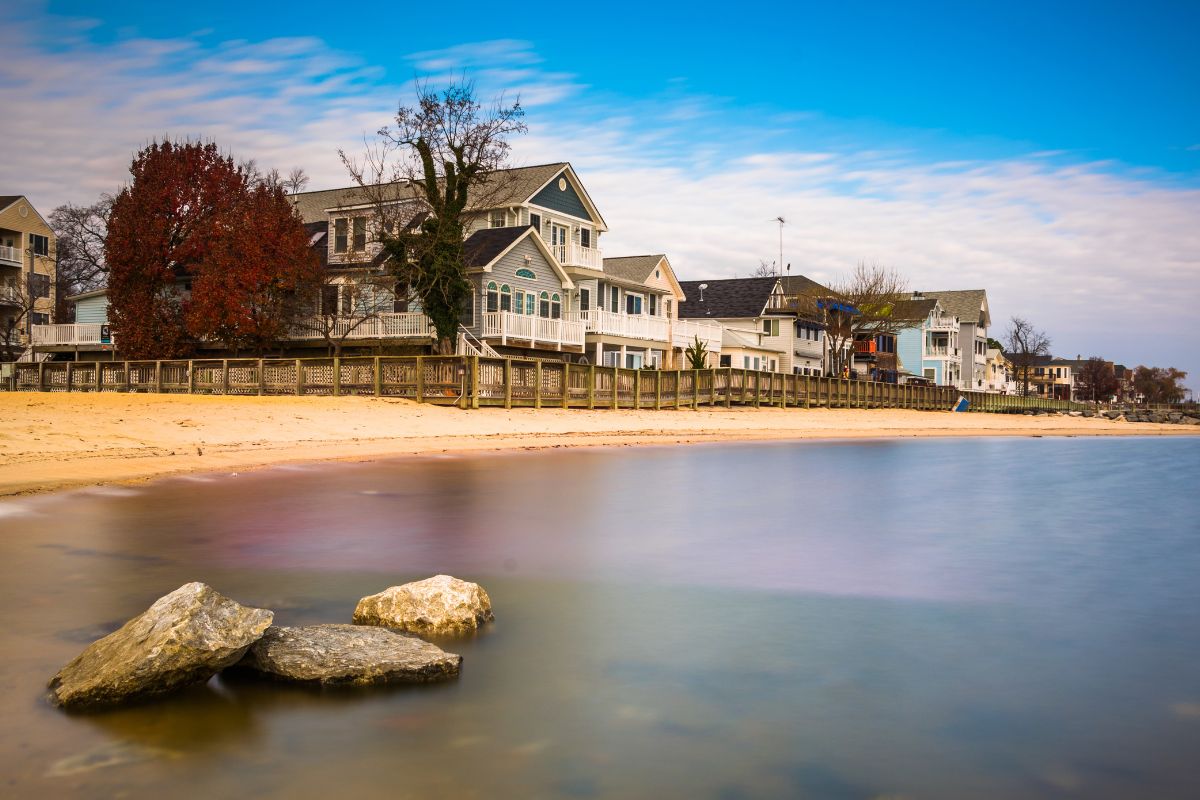
Why Annapolis Is Still One of Maryland’s Most Sought After Waterfront Markets Annapolis has long held a reputation as one of Maryland’s most desirable waterfront destinations. With its historic charm, boating culture, and access to the Chesapeake Bay, this capital city continues to attract buyers seeking lifestyle and long term value. Whether you are relocating, investing, or upgrading to a waterfront estate, the Annapolis market remains a standout along the East Coast. Next Step Realty helps buyers and sellers navigate this competitive market with insight and local expertise. True Waterfront Lifestyle Appeal Few markets in Maryland offer the same combination of navigable water access, historic architecture, and vibrant downtown energy. From private docks to panoramic harbor views, Annapolis properties offer direct access to boating, sailing, and waterfront recreation. The Chesapeake Bay lifestyle is not seasonal here. Residents enjoy waterfront dining, yacht clubs, regattas, and scenic sunset views throughout much of the year. For buyers who value coastal living without leaving Maryland, Annapolis delivers an unmatched experience. Historic Charm Meets Luxury Living Downtown Annapolis blends colonial architecture with modern renovations and luxury finishes. Buyers can find restored historic homes with preserved character alongside newly constructed waterfront estates designed for contemporary living. Private deep water docks Custom outdoor entertaining spaces Chef inspired kitchens with water views Expansive primary suites with private balconies This blend of heritage and high end design creates strong buyer demand across price points. Proximity to Major Employment Hubs Annapolis offers waterfront tranquility while remaining accessible to Washington DC and Baltimore. Professionals who work in nearby metropolitan areas often choose Annapolis for its lifestyle advantages without sacrificing commute options. Buyers also consider nearby communities such as Severna Park and Arnold, which provide additional waterfront opportunities and strong residential appeal. Strong Long Term Value Waterfront property tends to hold long term desirability due to limited supply. Annapolis is no exception. With restricted shoreline inventory and continued buyer interest, waterfront homes often command premium pricing and sustained appreciation. For broader insights into waterfront property trends and coastal market dynamics, the National Oceanic and Atmospheric Administration provides data on shoreline and coastal regions at coast.noaa.gov. Community and Cultural Energy Annapolis is more than water views. The city hosts year round festivals, sailing events, farmers markets, and dining experiences that keep the community vibrant. The United States Naval Academy adds tradition and prestige, reinforcing the city’s identity and stability. What Buyers Should Consider Dock depth and water access for boating needs Flood zone and elevation factors Historic district regulations Seasonal market timing for waterfront inventory Is Annapolis the Right Waterfront Market for You For buyers seeking a balance of elegance, recreation, and long term investment strength, Annapolis continues to stand apart. Limited inventory, historic character, and Chesapeake Bay access create a unique market that consistently attracts attention. Next Step Realty provides local expertise to help you evaluate waterfront opportunities, understand property nuances, and secure the right home in one of Maryland’s most desirable coastal markets. Frequently Asked Questions What's the median price for waterfront homes in Annapolis MD in 2026? Annapolis waterfront median sale price was approximately $1.45M in Q1 2026 per Bright MLS. The range spans dramatically: creek-front 3-bedroom cottages in Eastport at $850K to Severn River compounds at $4M+. Direct deep-water (8+ ft at MLW) trades at a 30-50% premium over creek/cove access. Do you need flood insurance for Annapolis waterfront homes? If the home is in FEMA Zone AE or VE (most direct waterfront), federally-backed mortgages require flood insurance. Annual premiums in Annapolis Zone AE typically run $2,500-6,500; Zone VE coastal can hit $8,000-15,000+. Anne Arundel buyers should pull the FEMA flood map and current insurance quote before making an offer, not after. What's the difference between dock rights and waterfront access in Annapolis? Dock rights mean the home includes the right to install/maintain a private pier. Waterfront access means the property touches water but may have community-pier-only access. In Anne Arundel County, dock permits are issued by the MD Department of the Environment and require pre-existing rights — you can't add a new pier on most properties. Verify dock rights in writing before offer. Is waterfront real estate in Annapolis a good investment in 2026? Annapolis waterfront has appreciated 38-52% over 2019-2025 vs 28% for non-waterfront Anne Arundel (Bright MLS). The appreciation premium is real but inventory is increasingly tight — only 40-60 waterfront listings active at any given time across the entire Annapolis market. The investment angle works if the buyer plans to hold 7+ years. {"@context": "https://schema.org", "@type": "FAQPage", "mainEntity": [{"@type": "Question", "name": "What's the median price for waterfront homes in Annapolis MD in 2026?", "acceptedAnswer": {"@type": "Answer", "text": "Annapolis waterfront median sale price was approximately $1.45M in Q1 2026 per Bright MLS. The range spans dramatically: creek-front 3-bedroom cottages in Eastport at $850K to Severn River compounds at $4M+. Direct deep-water (8+ ft at MLW) trades at a 30-50% premium over creek/cove access."}}, {"@type": "Question", "name": "Do you need flood insurance for Annapolis waterfront homes?", "acceptedAnswer": {"@type": "Answer", "text": "If the home is in FEMA Zone AE or VE (most direct waterfront), federally-backed mortgages require flood insurance. Annual premiums in Annapolis Zone AE typically run $2,500-6,500; Zone VE coastal can hit $8,000-15,000+. Anne Arundel buyers should pull the FEMA flood map and current insurance quote before making an offer, not after."}}, {"@type": "Question", "name": "What's the difference between dock rights and waterfront access in Annapolis?", "acceptedAnswer": {"@type": "Answer", "text": "Dock rights mean the home includes the right to install/maintain a private pier. Waterfront access means the property touches water but may have community-pier-only access. In Anne Arundel County, dock permits are issued by the MD Department of the Environment and require pre-existing rights — you can't add a new pier on most properties. Verify dock rights in writing before offer."}}, {"@type": "Question", "name": "Is waterfront real estate in Annapolis a good investment in 2026?", "acceptedAnswer": {"@type": "Answer", "text": "Annapolis waterfront has appreciated 38-52% over 2019-2025 vs 28% for non-waterfront Anne Arundel (Bright MLS). The appreciation premium is real but inventory is increasingly tight — only 40-60 waterfront listings active at any given time across the entire Annapolis market. The investment angle works if the buyer plans to hold 7+ years."}}]}
Read more